Jesus Christ

If Only I Had a Mediator: The Struggles of Job

I have always struggled with the book of Job. Part of me even hated its existence. I hated the idea that the God I loved whom I believed loved me could seem to so carelessly allow the Devil to inflict torment on His most faithful follower. I was terrified it would happen to me.

The God of Job did not seem to mesh with the God I knew from the rest of the Bible. Yes, God’s wrath in the Old Testament was terrifying, but in every other place in the Bible it seemed justified. But, in this case even God declared Job to be upright.

Job 1:1 (NIV) says, “In the land of Uz there lived a man whose name was Job. This man was blameless and upright; he feared God and shunned evil.”

Job 1:8 (NIV) says, “Then the Lord said to Satan, ‘Have you considered my servant Job? There is no one on earth like him; he is blameless and upright, a man who fears God and shuns evil.’”
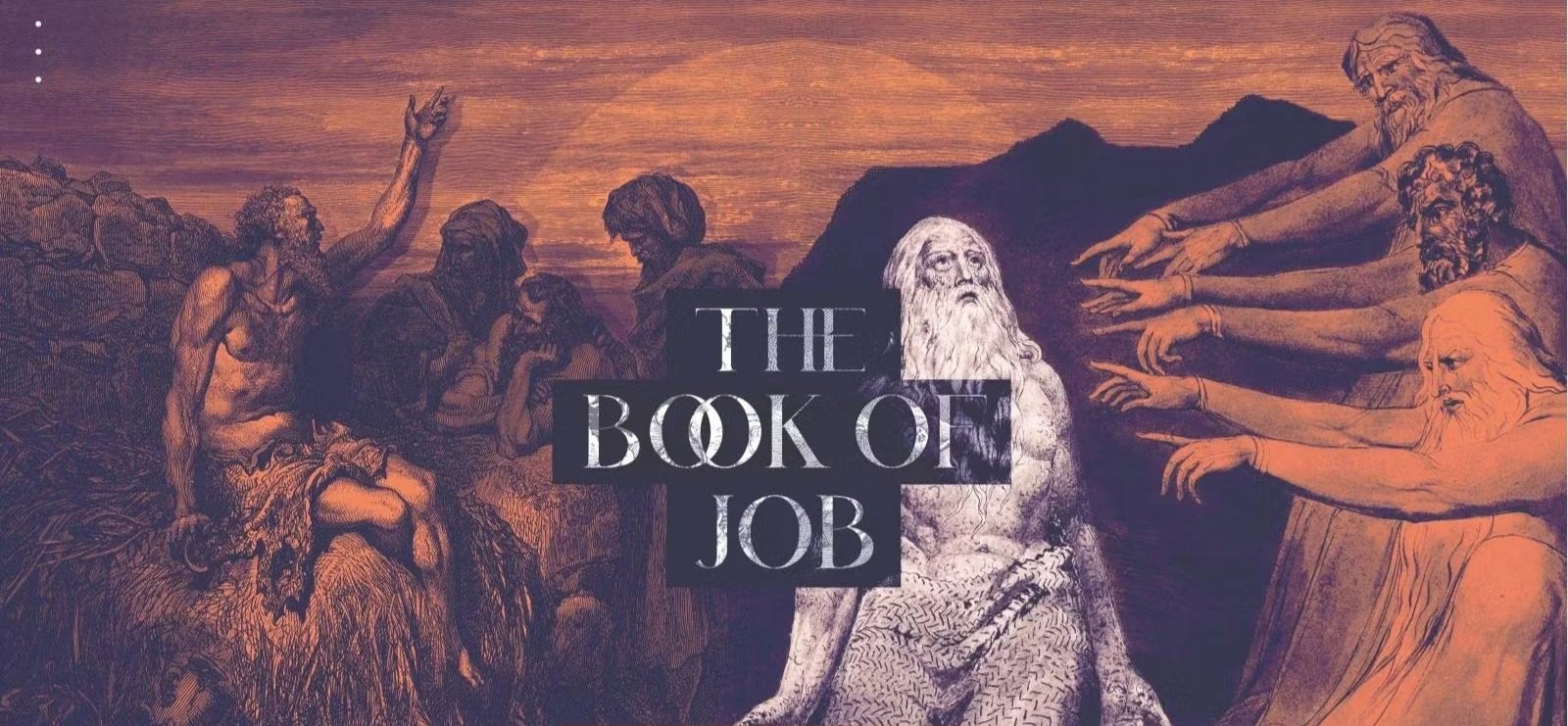
This brings up the following questions: Why is God allowing bad things to happen to Job and what should Job do to make them stop? What good could possibly come from God allowing a good man to suffer? How is this okay?

But, I’ve recently realized that these are the wrong questions. Yes, these are the questions that Job and his friends are asking in the book, but God never answers them directly. Instead, when He speaks up, He tells them they simply need to accept that some things are beyond human understanding and they need to have faith in Him and His choices.

God’s response to those questions lets us know that answering them isn’t God's primary purpose in telling us this story, otherwise He would have answered them. Yes, we can learn what some of the wrong answers are by reading how Job’s friends incorrectly answered those questions, but I believe those lessons are secondary to God’s primary purpose.

The book of Job isn’t a cautionary story. It isn’t meant to teach us how to avoid bad things happening to us.
— Amanda Hovseth

This means the book of Job isn’t a cautionary story. It isn’t meant to teach us how to avoid bad things happening to us. It’s a lesson from God on how powerful He is and on what our place in existence is as finite humans in light of His power. We need to have a proper understanding of this dynamic in order to learn everything else God is trying to teach us throughout the Bible.

God is great and vast and almighty and untouchable and unreachable; we are nothing in comparison, a blip in an ocean of time and matter. We have no logical right to think God should concern Himself with us at all. And even if He would concern Himself with us, we have no reason to think He would consider us to be innocent or worthy of His mercy.

One of my favorite quotes from the Bible is from Job 38:4 when God finally replies to Job and his friends. He says, “Where were you when I laid the foundations of the earth? Tell me then if you know so much?” Then God goes on to give example after example of things He is capable of doing that we could barely even comprehend being possible

The book of Job corrects our human mentality that we are the center of the universe. It shows us the reality of our place in all of time and how truly helpless and powerless we are. It tells us that we are so far below God that we cannot even understand His thought processes unless He makes them understandable to us and that we have no choice but to accept this. God can do whatever He wants with us or to us, and there is nothing we can do about it.

God is saying: “Know your place. Know who I am and who you are in comparison.”

God is Great. God is untouchable. God owes us nothing. We are powerless to insist God do anything for us. God could wipe us out of existence and no one and nothing could dream of stopping Him.


Thankfully, the lesson doesn’t stop there. For the first time ever, an important point made by this story finally clicked in my mind as I was reading through Job chapter 9 when Job said the following in verses 32-35 (NIV):

“He (God) is not a mere mortal like me that I might answer him, that we might confront each other in court. If only there were someone to mediate between us, someone to bring us together, someone to remove God’s rod from me, so that his terror would frighten me no more. Then I would speak up without fear of him, but as it now stands with me, I cannot.”

“If only there were someone to mediate between us…”

We will never be in the exact same position as Job, because while he may not have had a mediator yet, we do:

1 Timothy 2:5 (NIV) says, “For there is one God and one mediator between God and mankind, the man Christ Jesus.”
Hebrews 9:15 (NIV) says, “For this reason Christ is the mediator of a new covenant, that those who are called may receive the promised eternal inheritance—now that he has died as a ransom to set them free from the sins committed under the first covenant.”

John 14:6 (NIV) says, “Jesus answered, ‘I am the way and the truth and the life. No one comes to the Father except through me.’”
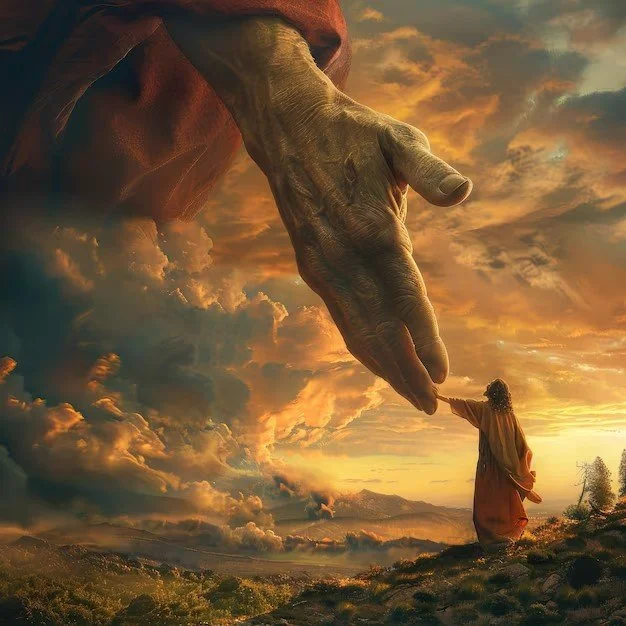

In spite of God’s vastness and separateness from humanity, He did choose to speak to Job. God didn’t have to give Job any mercy or bless him with anything good, and yet at the end of this lesson, He does.

In spite of the fact that we cannot reach God on our own and are powerless to force Him to listen to us or consider us, God does listen. God didn’t have to explain Himself to us and yet He chose to do so through the Bible. God didn’t have to send us a mediator to bring us into a relationship with Him, and yet, He cared enough to send Jesus to redeem us. 

And, then He also sent the Holy Spirit, to live with us and speak for us here on earth. 

John 14:16-17 (NIV) says, “And I (Jesus) will ask the Father, and he will give you another advocate to help you and be with you forever— the Spirit of truth. The world cannot accept him, because it neither sees him nor knows him. But you know him, for he lives with you and will be with you.”
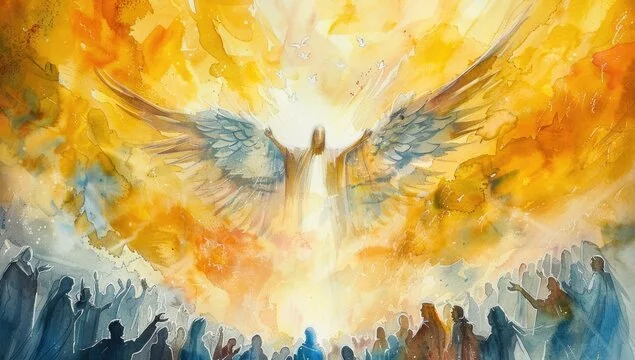
Job recognized the vast divide between humanity and God–just as all of us should–and he yearned for a way to petition God. God responded by saying, “Humanity has no right to request that…but I love you and I want to give it to you and so I will.”

1 John 4:10-16 (NIV) says, “This is love: not that we loved God, but that he loved us and sent his Son as an atoning sacrifice for our sins…This is how we know that we live in him and he in us: He has given us of his Spirit. And we have seen and testify that the Father has sent his Son to be the Savior of the world. If anyone acknowledges that Jesus is the Son of God, God lives in them and they in God. And so we know and rely on the love God has for us. God is love. Whoever lives in love lives in God, and God in them.”

Without God’s love we have nothing and are nothing. But He does love us and He has proven it time and again. The book of Job teaches us that our hearts should be overflowing with gratitude.


This series of blog posts titled, “Holding on to Reason”, is named after Amanda’s favorite C.S. Lewis quote: “Faith is the art of holding on to things your reason has once accepted, in spite of your changing moods.”
Click here for more things written by Amanda Hovseth.

Prayers of the Bible: Part 1

Jesus’ Prayer for Believers

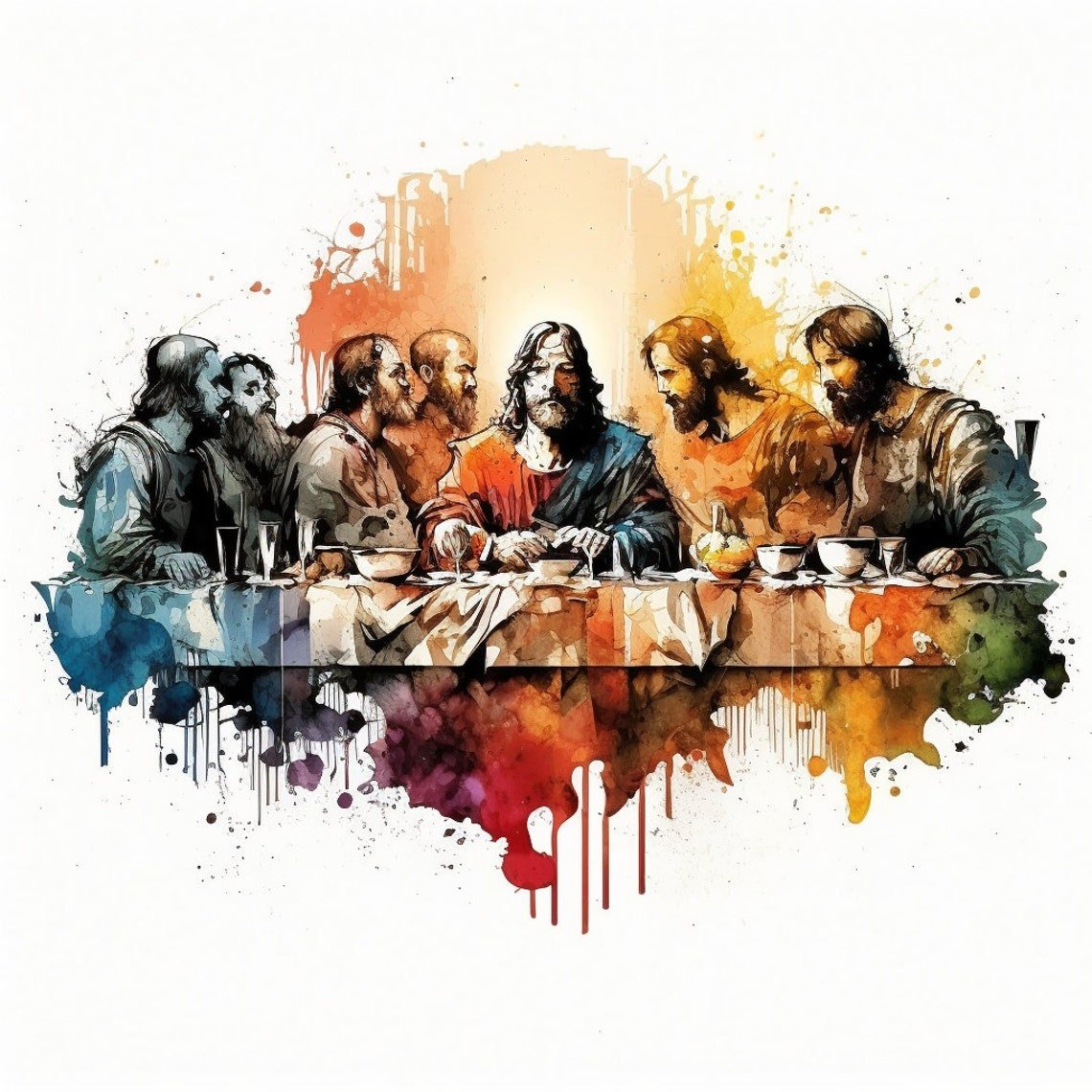
Jesus’ Last Supper in Watercolor

Context: This is a part of Jesus’s prayer during ‘The Last Supper’ when He prayed for all of us who choose to believe in Him.

“My prayer is not for them alone (the Disciples). I pray also for those who will believe in me through their message, that all of them may be one, Father, just as you are in me and I am in you. May they also be in us so that the world may believe that you have sent me. I have given them the glory that you gave me, that they may be one as we are one—I in them and you in me—so that they may be brought to complete unity. Then the world will know that you sent me and have loved them even as you have loved me.” ­ -John 17:20-23 (NIV)

 A Song of Praise by Moses, Miriam, and the Israelites

Context: Moses led the Israelites out of Egypt to the bank of the Red Sea. Pharaoh’s army pursued them there, trapping them. But, God split the sea, allowing the Israelites to cross on dry land. Pharaoh’s army tried to pursue them through the sea, only to have God return the waters and drown them. Once safe on the other side of the Red Sea; Moses, Miriam, and the Israelites sang a song of praise.

Then Moses and the Israelites sang this song to the Lord:

“I will sing to the Lord,
    for he is highly exalted.
Both horse and driver
    he has hurled into the sea.

“The Lord is my strength and my defense;
    he has become my salvation.
He is my God, and I will praise him,
    my father’s God, and I will exalt him.
The Lord is a warrior;
    the Lord is his name.
Pharaoh’s chariots and his army
    he has hurled into the sea.
The best of Pharaoh’s officers
    are drowned in the Red Sea.
The deep waters have covered them;
    they sank to the depths like a stone.
Your right hand, Lord,
    was majestic in power.
Your right hand, Lord,
    shattered the enemy.

“In the greatness of your majesty
    you threw down those who opposed you.
You unleashed your burning anger;
    it consumed them like stubble.
By the blast of your nostrils
    the waters piled up.
The surging waters stood up like a wall;
    the deep waters congealed in the heart of the sea.
The enemy boasted,
    ‘I will pursue, I will overtake them.
I will divide the spoils;
    I will gorge myself on them.
I will draw my sword
    and my hand will destroy them.’
But you blew with your breath,
    and the sea covered them.
They sank like lead
    in the mighty waters.
Who among the gods
    is like you, Lord?
Who is like you—
    majestic in holiness,
awesome in glory,
    working wonders?

“You stretch out your right hand,
    and the earth swallows your enemies.
In your unfailing love you will lead
    the people you have redeemed.
In your strength you will guide them
    to your holy dwelling.
The nations will hear and tremble;
    anguish will grip the people of Philistia.
The chiefs of Edom will be terrified,
    the leaders of Moab will be seized with trembling,
the people[c] of Canaan will melt away;
     terror and dread will fall on them.
By the power of your arm
    they will be as still as a stone—
until your people pass by, Lord,
    until the people you bought[d] pass by.
You will bring them in and plant them
    on the mountain of your inheritance—
the place, Lord, you made for your dwelling,
    the sanctuary, Lord, your hands established.

“The Lord reigns
    for ever and ever.”

When Pharaoh’s horses, chariots and horsemen went into the sea, the Lord brought the waters of the sea back over them, but the Israelites walked through the sea on dry ground. Then Miriam the prophet, Aaron’s sister, took a timbrel in her hand, and all the women followed her, with timbrels and dancing. Miriam sang to them:

“Sing to the Lord,
    for he is highly exalted.
Both horse and driver
    he has hurled into the sea.”
- Exodus 15:1-21 (NIV)

Hannah’s Prayer of Thankfulness

Context: Hannah had been desperately praying for God to grant her a child. He answered her prayers, giving her a son. She named him Samuel which means, “Because I asked the Lord for him.” This is her prayer of thanks after God granted her a child.

Hannah dedicated Samuel to God.  Samuel became a priest, a prophet, and the last judge for the Israelite nation. He anointed Saul and then David, to be the first and second kings of Israel.

“My heart rejoices in the Lord;
    in the Lord my horn is lifted high.
My mouth boasts over my enemies,
    for I delight in your deliverance.

“There is no one holy like the Lord;
    there is no one besides you;
    there is no Rock like our God.

“Do not keep talking so proudly
    or let your mouth speak such arrogance,
for the Lord is a God who knows,
    and by him deeds are weighed.

“The bows of the warriors are broken,
    but those who stumbled are armed with strength.
Those who were full hire themselves out for food,
    but those who were hungry are hungry no more.
She who was barren has borne seven children,
    but she who has had many sons pines away.

“The Lord brings death and makes alive;
    he brings down to the grave and raises up.
 The Lord sends poverty and wealth;
    he humbles and he exalts.
He raises the poor from the dust
    and lifts the needy from the ash heap;
he seats them with princes
    and has them inherit a throne of honor.

“For the foundations of the earth are the Lord’s;
    on them he has set the world.
He will guard the feet of his faithful servants,
    but the wicked will be silenced in the place of darkness.

“It is not by strength that one prevails;
    those who oppose the Lord will be broken.
The Most High will thunder from heaven;
    the Lord will judge the ends of the earth.

“He will give strength to his king
    and exalt the horn of his anointed.”

-1 Samuel 2:1b-10 (NIV)

 Asaph’s Prayer about His Despair

Context: Asaph, from the book of Psalms, is one of the Levites whom King David assigned as worship leaders in the Tabernacle choir. This Psalm was meant to be sung to the Lord in praise. In it, Asaph was suffering from extreme depression. He sang about his struggle and explained how he would combat that struggle. He did so by remembering everything God had done in the past. Through considering God’s actions as a whole, Asaph was reassured about who God is and how powerful He is. Then, instead of focusing on his despair, he chose to focus on the historically proven truth that God is always faithful.

I cry aloud to God,
    aloud to God, and he will hear me.
In the day of my trouble I seek the Lord;
    in the night my hand is stretched out without wearying;
    my soul refuses to be comforted.
When I remember God, I moan;
    when I meditate, my spirit faints. Selah

You hold my eyelids open;
    I am so troubled that I cannot speak.
I consider the days of old,
    the years long ago.
I said, “Let me remember my song in the night;
    let me meditate in my heart.”
    Then my spirit made a diligent search:
“Will the Lord spurn forever,
    and never again be favorable?
Has his steadfast love forever ceased?
    Are his promises at an end for all time?
Has God forgotten to be gracious?
    Has he in anger shut up his compassion?” Selah

Then I said, “I will appeal to this,
    to the years of the right hand of the Most High.”

I will remember the deeds of the Lord;
    yes, I will remember your wonders of old.
I will ponder all your work,
    and meditate on your mighty deeds.
Your way, O God, is holy.
    What god is great like our God?
You are the God who works wonders;
    you have made known your might among the peoples.
You with your arm redeemed your people,
    the children of Jacob and Joseph. Selah

When the waters saw you, O God,
    when the waters saw you, they were afraid;
    indeed, the deep trembled.
The clouds poured out water;
    the skies gave forth thunder;
    your arrows flashed on every side.
The crash of your thunder was in the whirlwind;
    your lightnings lighted up the world;
    the earth trembled and shook.
Your way was through the sea,
    your path through the great waters;
    yet your footprints were unseen.[c
You led your people like a flock
    by the hand of Moses and Aaron.

- Psalm 77 (ESV)


King David’s Prayer of Repentance

Context: King David was walking on his roof when he saw Bathsheba bathing. Bathsheba was married to a man named Uriah who was one of David’s inner-circle known as his “mighty men”. Even so, David called Bathsheba to come to him and he lay with her. She became pregnant. After trying and failing at a couple of deceptive tactics in order to get away with his actions, David plotted to have Uriah killed in battle. Then David married Bathsheba in order to try and cover up their infidelity. Of course, nothing can be hidden from God. God sent his prophet, Nathan, to confront David about his actions. When confronted, David was struck down with grief. This is his prayer to God when he asked for forgiveness.

Have mercy on me, O God,
    according to your steadfast love;
according to your abundant mercy
    blot out my transgressions.
Wash me thoroughly from my iniquity,
    and cleanse me from my sin!

For I know my transgressions,
    and my sin is ever before me.
Against you, you only, have I sinned
    and done what is evil in your sight,
so that you may be justified in your words
    and blameless in your judgment.
Behold, I was brought forth in iniquity,
    and in sin did my mother conceive me.
Behold, you delight in truth in the inward being,
    and you teach me wisdom in the secret heart.

Purge me with hyssop, and I shall be clean;
    wash me, and I shall be whiter than snow.
Let me hear joy and gladness;
    let the bones that you have broken rejoice.
Hide your face from my sins,
    and blot out all my iniquities.
Create in me a clean heart, O God,
    and renew a right[
b] spirit within me.
Cast me not away from your presence,
    and take not your Holy Spirit from me.
Restore to me the joy of your salvation,
    and uphold me with a willing spirit.

Then I will teach transgressors your ways,
    and sinners will return to you.
Deliver me from bloodguiltiness, O God,
    O God of my salvation,
    and my tongue will sing aloud of your righteousness.
O Lord, open my lips,
    and my mouth will declare your praise.
For you will not delight in sacrifice, or I would give it;
    you will not be pleased with a burnt offering.
The sacrifices of God are a broken spirit;
    a broken and contrite heart, O God, you will not despise.

Do good to Zion in your good pleasure;
    build up the walls of Jerusalem;
then will you delight in right sacrifices,
    in burnt offerings and whole burnt offerings;
    then bulls will be offered on your altar.

- Psalm 51:1-19 (ESV)


This series of blog posts titled, “Holding on to Reason”, is named after Amanda’s favorite C.S. Lewis quote: “Faith is the art of holding on to things your reason has once accepted, in spite of your changing moods.”

Click here for more things written by Amanda Hovseth.