

I have always struggled with the book of Job. Part of me even hated its existence. I hated the idea that the God I loved whom I believed loved me could seem to so carelessly allow the Devil to inflict torment on His most faithful follower. I was terrified it would happen to me.
The God of Job did not seem to mesh with the God I knew from the rest of the Bible. Yes, God’s wrath in the Old Testament was terrifying, but in every other place in the Bible it seemed justified. But, in this case even God declared Job to be upright.
Job 1:1 (NIV) says, “In the land of Uz there lived a man whose name was Job. This man was blameless and upright; he feared God and shunned evil.”
Job 1:8 (NIV) says, “Then the Lord said to Satan, ‘Have you considered my servant Job? There is no one on earth like him; he is blameless and upright, a man who fears God and shuns evil.’”
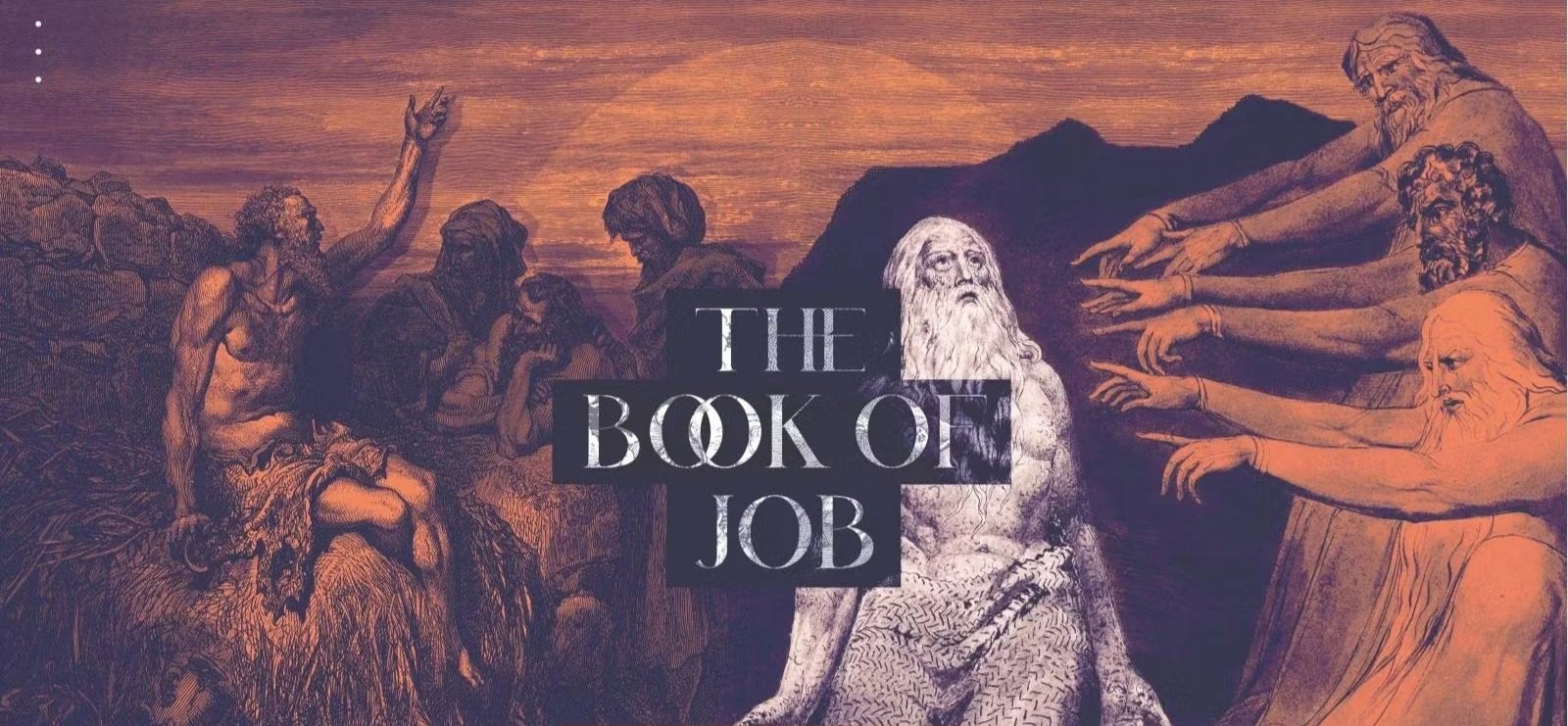
This brings up the following questions: Why is God allowing bad things to happen to Job and what should Job do to make them stop? What good could possibly come from God allowing a good man to suffer? How is this okay?
But, I’ve recently realized that these are the wrong questions. Yes, these are the questions that Job and his friends are asking in the book, but God never answers them directly. Instead, when He speaks up, He tells them they simply need to accept that some things are beyond human understanding and they need to have faith in Him and His choices.
God’s response to those questions lets us know that answering them isn’t God's primary purpose in telling us this story, otherwise He would have answered them. Yes, we can learn what some of the wrong answers are by reading how Job’s friends incorrectly answered those questions, but I believe those lessons are secondary to God’s primary purpose.
“The book of Job isn’t a cautionary story. It isn’t meant to teach us how to avoid bad things happening to us.”
This means the book of Job isn’t a cautionary story. It isn’t meant to teach us how to avoid bad things happening to us. It’s a lesson from God on how powerful He is and on what our place in existence is as finite humans in light of His power. We need to have a proper understanding of this dynamic in order to learn everything else God is trying to teach us throughout the Bible.
God is great and vast and almighty and untouchable and unreachable; we are nothing in comparison, a blip in an ocean of time and matter. We have no logical right to think God should concern Himself with us at all. And even if He would concern Himself with us, we have no reason to think He would consider us to be innocent or worthy of His mercy.

One of my favorite quotes from the Bible is from Job 38:4 when God finally replies to Job and his friends. He says, “Where were you when I laid the foundations of the earth? Tell me then if you know so much?” Then God goes on to give example after example of things He is capable of doing that we could barely even comprehend being possible
The book of Job corrects our human mentality that we are the center of the universe. It shows us the reality of our place in all of time and how truly helpless and powerless we are. It tells us that we are so far below God that we cannot even understand His thought processes unless He makes them understandable to us and that we have no choice but to accept this. God can do whatever He wants with us or to us, and there is nothing we can do about it.
God is saying: “Know your place. Know who I am and who you are in comparison.”
God is Great. God is untouchable. God owes us nothing. We are powerless to insist God do anything for us. God could wipe us out of existence and no one and nothing could dream of stopping Him.
Thankfully, the lesson doesn’t stop there. For the first time ever, an important point made by this story finally clicked in my mind as I was reading through Job chapter 9 when Job said the following in verses 32-35 (NIV):
“He (God) is not a mere mortal like me that I might answer him, that we might confront each other in court. If only there were someone to mediate between us, someone to bring us together, someone to remove God’s rod from me, so that his terror would frighten me no more. Then I would speak up without fear of him, but as it now stands with me, I cannot.”
“If only there were someone to mediate between us…”
We will never be in the exact same position as Job, because while he may not have had a mediator yet, we do:
1 Timothy 2:5 (NIV) says, “For there is one God and one mediator between God and mankind, the man Christ Jesus.”

Hebrews 9:15 (NIV) says, “For this reason Christ is the mediator of a new covenant, that those who are called may receive the promised eternal inheritance—now that he has died as a ransom to set them free from the sins committed under the first covenant.”
John 14:6 (NIV) says, “Jesus answered, ‘I am the way and the truth and the life. No one comes to the Father except through me.’”

In spite of God’s vastness and separateness from humanity, He did choose to speak to Job. God didn’t have to give Job any mercy or bless him with anything good, and yet at the end of this lesson, He does.
In spite of the fact that we cannot reach God on our own and are powerless to force Him to listen to us or consider us, God does listen. God didn’t have to explain Himself to us and yet He chose to do so through the Bible. God didn’t have to send us a mediator to bring us into a relationship with Him, and yet, He cared enough to send Jesus to redeem us.
And, then He also sent the Holy Spirit, to live with us and speak for us here on earth.
John 14:16-17 (NIV) says, “And I (Jesus) will ask the Father, and he will give you another advocate to help you and be with you forever— the Spirit of truth. The world cannot accept him, because it neither sees him nor knows him. But you know him, for he lives with you and will be with you.”

Job recognized the vast divide between humanity and God–just as all of us should–and he yearned for a way to petition God. God responded by saying, “Humanity has no right to request that…but I love you and I want to give it to you and so I will.”
1 John 4:10-16 (NIV) says, “This is love: not that we loved God, but that he loved us and sent his Son as an atoning sacrifice for our sins…This is how we know that we live in him and he in us: He has given us of his Spirit. And we have seen and testify that the Father has sent his Son to be the Savior of the world. If anyone acknowledges that Jesus is the Son of God, God lives in them and they in God. And so we know and rely on the love God has for us. God is love. Whoever lives in love lives in God, and God in them.”

Without God’s love we have nothing and are nothing. But He does love us and He has proven it time and again. The book of Job teaches us that our hearts should be overflowing with gratitude.
This series of blog posts titled, “Holding on to Reason”, is named after Amanda’s favorite C.S. Lewis quote: “Faith is the art of holding on to things your reason has once accepted, in spite of your changing moods.”