
Imagine you are growing up in ancient Rome.
You are raised believing in a hierarchy of humanity which is determined by social class, ancestry, gender, and wealth. It is so rare for someone to climb the social ranks–escaping the fate of their birth–that you have never seen it happen. Of course falling in rank is significantly easier if people are unwise with their wealth or they upset someone of a higher standing than them.
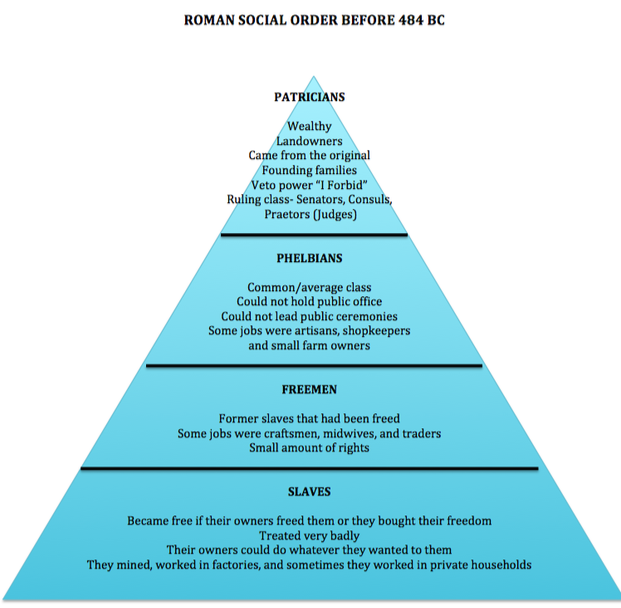
Women hold the status of their birth families but even in the highest-ranking families the women are still under the control of their paterfamilias, which is either their father, husband, or sometimes their eldest brother. They have very little influence outside of their own home. And since young girls will grow up and leave the household to become a member of a different household, they are viewed as less valuable to their birth family’s future than males.
The lowest rank of personhood–even lower than slaves–are unnamed infants because they aren’t considered human until they have been named. This mindset allows infanticide to run wild–after all if they’re not human why should anyone concern themselves with their fate?
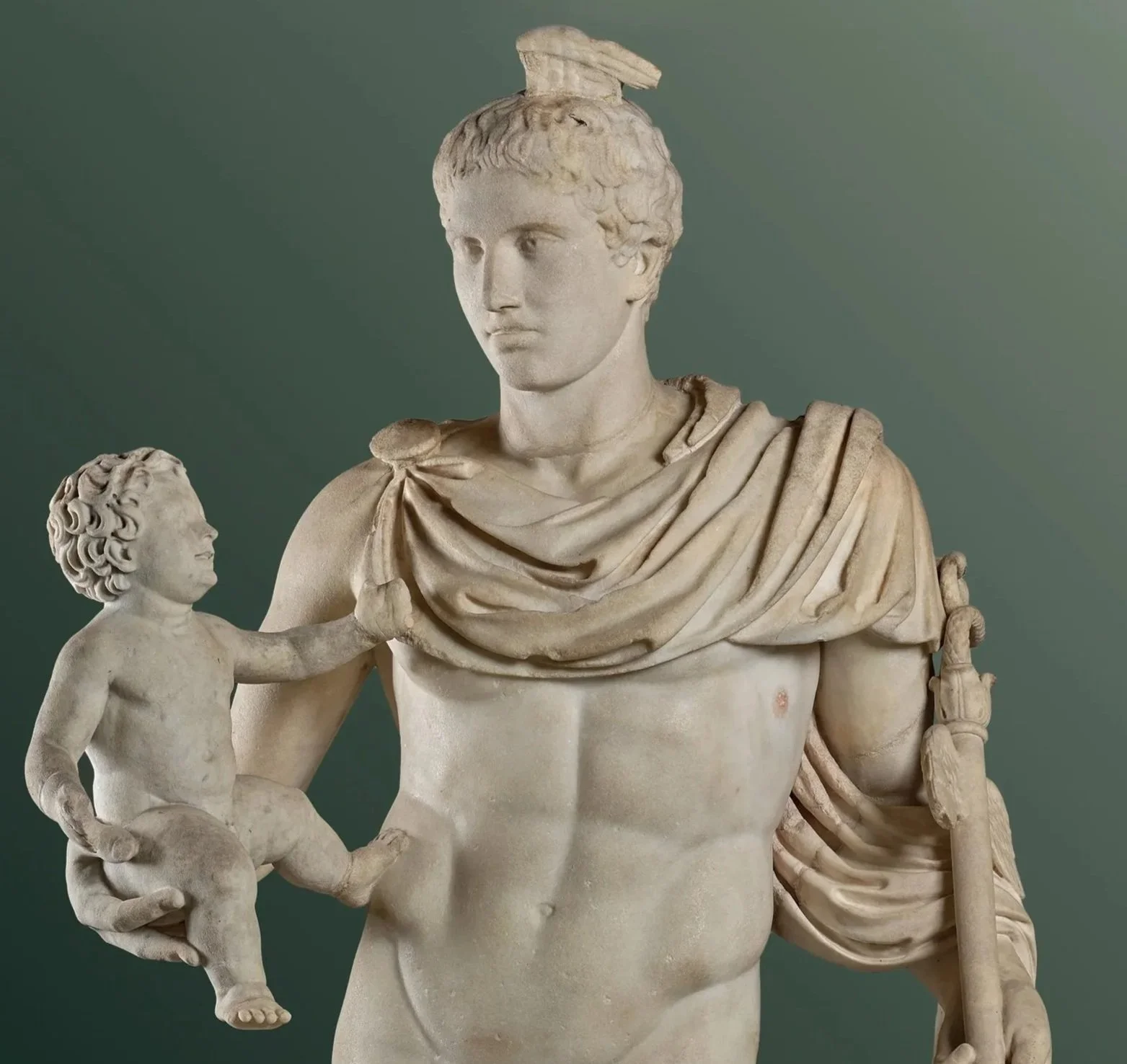
The Twelve Tables (an early codification of Roman law) states that, “A dreadfully deformed child shall be quickly killed.” Fathers legally have the ultimate decision over the fate of a newborn. So it is their job to assess the infant and consider its future value to the family. If the baby will be a burden on the family and society then infanticide is viewed as a governmentally sanctioned mercy and, therefore, morally expected.
Even the educated and highly regarded philosopher Cicero (106-43 BC) in his “On the Laws 3.8” says: “Deformed infants shall be killed.” And what counts as a “deformity”? It could be an obvious physical deformation, a sickly child, a wrong sex child (usually female), or simply an unwanted child.
Growing up pagan in ancient Rome you have been taught to believe the State/the tribe/the collective is the only thing of value and you make choices accordingly.

Then you learn about Jesus.
You come to believe that He is God–as proven by His multitude of miracles and resurrection from the dead. You decide that since He is God you should believe His teachings.
These teaching show you that you cannot undo all of the ways you have defied God’s will and design. No amount of good deeds can undo all of the bad and the mistakes you have done. And you know God is just, so you know you are lost.
Then you learn if you set aside your innate desire to be the master of your own fate and accept Christ’s payment on the cross for your sins, then you can be made right in God’s eyes.
You want that. You pray to God, telling Him you are sorry and asking Him to accept Christ’s payment for your sins as your own. And it feels as if a giant weight is lifted from your chest. You are free. You are forgiven. You are made new.
You start to regularly attend the gatherings of Christians.
They teach you that God, Himself, designed each human being.
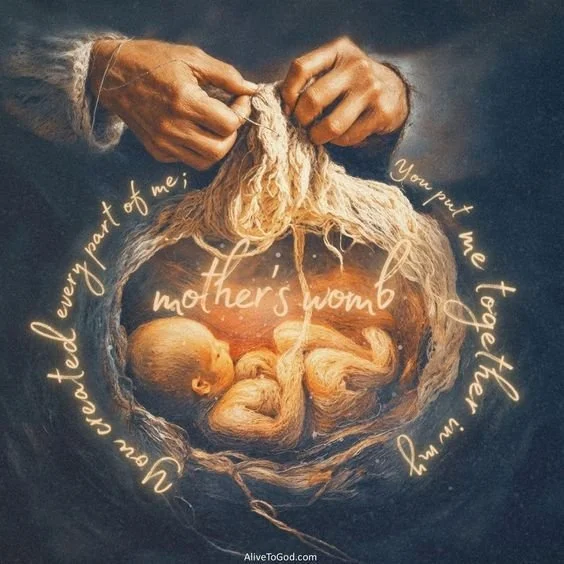
Psalm 139:13-16 (NIV) “For you created my inmost being; you knit me together in my mother’s womb. I praise you because I am fearfully and wonderfully made; your works are wonderful, I know that full well. My frame was not hidden from you when I was made in the secret place, when I was woven together in the depths of the earth. Your eyes saw my unformed body; all the days ordained for me were written in your book before one of them came to be.”
You learn God designed all humans in His image.
Genesis 1:26-27 (NIV) "Then God said, 'Let us make man in our image, after our likeness.' So God created mankind in his own image, in the image of God he created them; male and female he created them."
You start to realize that if each and every human is made in the image of God (males and females) then each and every human has intrinsic value. No one has to earn their worth. The almighty God views each of us as invaluable simply because we exist as His image bearers.

It begins to sink in that Jesus died for everyone–not just for you or for people of the higher classes–and everyone who comes to Him in faith is adopted into God’s family as equals. In God’s family there is no hierarchy determined by social class, ancestry, gender, or wealth.
John 1:12 (NIV) "But to all who did receive him, who believed in his name, he gave the right to become children of God."
Galatians 3:28 (NIV) “There is neither Jew nor Gentile, neither slave nor free, nor is there male and female, for you are all one in Christ Jesus.”
Then one evening, as you’re walking past the local garbage heap you hear the cry of an abandoned infant.
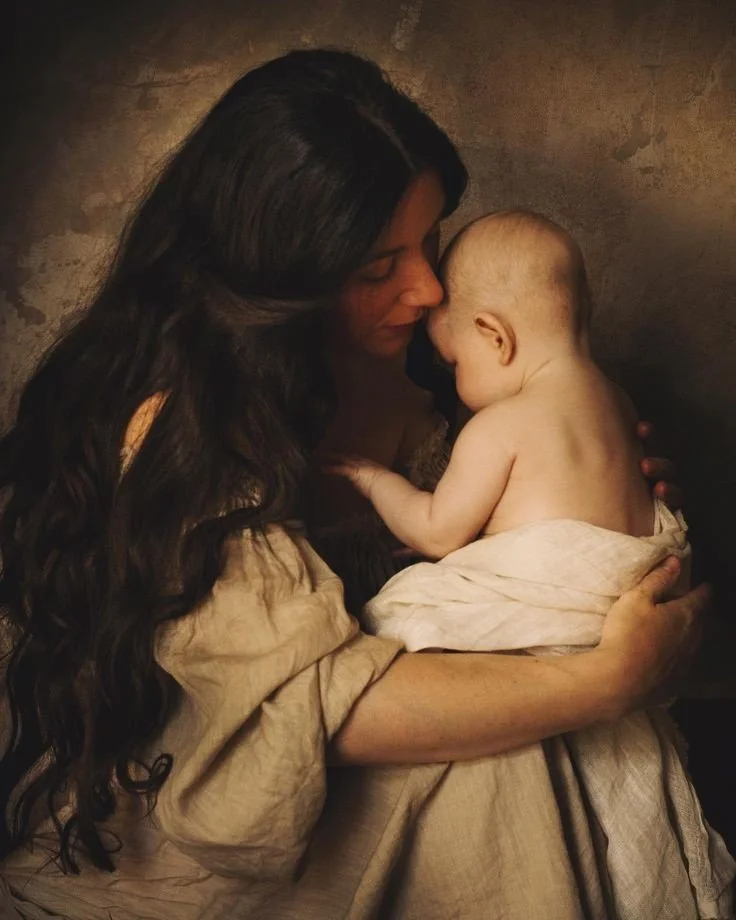
This isn’t new to you but it no longer sounds like an acceptable background noise. Instead it strikes a gaping wound into your heart and the Holy Spirit urges you to take action.
You climb over the piles of debris until you find the tiny, unprotected body, shivering and alone. Tears spring to your eyes as you gently lift the baby into your arms and wrap it in your cloak. You are now determined that no matter what, no matter your financial or social situation, you will raise this child as your own and you will trust that God will provide the resources.
History tells us that this was a common occurrence. Wherever Christianity spread in Ancient Rome, God’s followers were rescuing and raising abandoned infants.
Tertullian wrote in his “Apologeticus” that, “Christians sought out the tiny bodies of newborn babies from the refuse and dung heaps and raised them as their own or tended to them before they died or gave them a decent burial.”
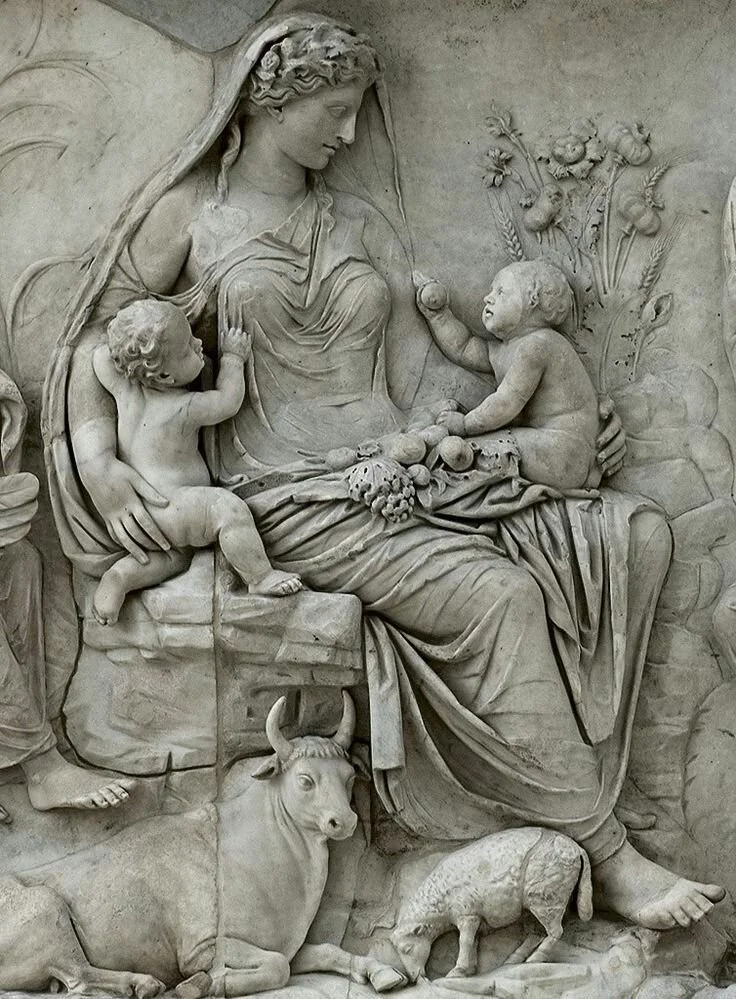
Many of the infants who had been abandoned due to deformities didn’t survive long, but they were kept loved and safe during however many days they had on this earth. The catacombs are filled with infant graves inscribed with the words “adopted son/daughter of–”. Infants who were destined to waste away with the refuse were given the love and dignity worthy of an image bearer of God.
Then there were the countless infants who had been abandoned simply for being born female. Most of those ones survived. And generations of rescued girls grew up in loving Christian homes.
It didn’t take long for a nation which favored male children and promoted infanticide, to begin to have a gender imbalance problem. So, as the unabandoned males grew up and began to look for wives, they quickly discovered that their options were severely limited. Eventually, they started to seek women out at the one place which had an abundance–they went to church. And the Gospel spread like wildfire.
There is no God like our God.

Our God loves us enough to be involved in each of our personal lives; but He is also powerful enough to hold the Heavens in place.
He reaches into the hearts of humanity to break them for the weak and powerless. He leads His followers to sacrifice their own comfort for the welfare of those in need.
He cares so much for each of His children that He cultivates personalized relationships with each of us and works on us individually to grow us into being more like Christ.
He guides us each into and through our own personalized calling. And, while to each of us our personal callings may seem small or trivial or boringly domestic–after all it’s “just one baby” amongst a sea of travesty–God is weaving all of our “small” callings together into a master tapestry which alters nations.
Our job is simply to follow Him.
This series of blog posts titled, “Holding on to Reason”, is named after Amanda’s favorite C.S. Lewis quote: “Faith is the art of holding on to things your reason has once accepted, in spite of your changing moods.”