

“You are the salt of the earth. But if the salt loses its saltiness, how can it be made salty again? It is no longer good for anything, except to be thrown out and trampled underfoot. You are the light of the world. A town built on a hill cannot be hidden. Neither do people light a lamp and put it under a bowl. Instead they put it on its stand, and it gives light to everyone in the house. In the same way, let your light shine before others, that they may see your good deeds and glorify your Father in heaven.” -Matthew 5:13-16 (NIV)

Christians are called to be salt and light to the world, but what does that mean in actual practice? What does a Christian look like when they are following this directive? How does it affect the world around them?
Let’s take a look at one of history’s great examples.
In 361-363 AD there was an Emperor named Julian who is known as “the last pagan Roman Emperor”. Julian was unhappy with the growth and general acceptance of Christianity and he wanted to restore paganism to Rome.
Julian analyzed what it was that the Christians had been doing to make their beliefs so desirable and then decided pagans should start behaving in the same way in order to draw people back to paganism. We can read about his thoughts in a letter he wrote to Priscus (the High Priest of Galatia) which is dated around 359 AD.
Let’s look at what it says:
(note that he refers to Christians as atheists and Christianity as atheism because Christians deny the existence of the pagan gods)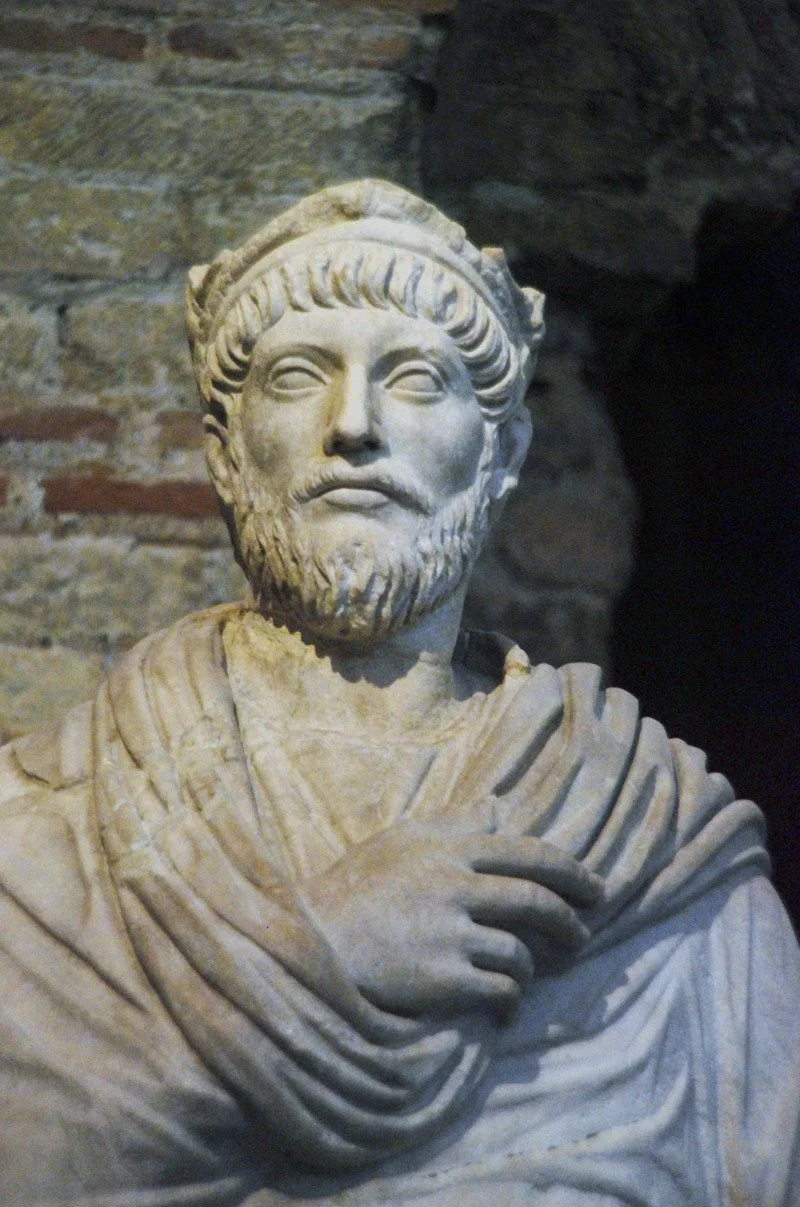
Emperor Julian - The Apostate | The Last Pagan Roman Emperor
“The pagan religion [hellēnismos/Hellenism] does not yet prosper as I desire, and it is the fault of those who profess it; for the worship of the gods is on a splendid and magnificent scale, surpassing every prayer and every hope. May the goddess Adrasteia pardon my words, for indeed no one, a little while ago, would have ventured even to pray for a grand, complete, and swift change [i.e., the mass conversion of Romans to Christianity]. Why do we pagan leaders not observe that it is [the Christians] benevolence to strangers, their care for the graves of the dead and the pretended holiness of their lives that have done most to increase atheism? I believe that we pagans ought really and truly to practice every one of these virtues. And it is not enough for you alone to practice them, but so must all the pagan priests in Galatia, without exception. If they do not attend the worship of the gods with their entire household, but allow their servants or sons or wives to show impiety towards the gods and honor atheism [i.e., Christianity, which did not believe in the pagan gods] more than piety [i.e., public sacrifices to the gods], then either shame or persuade them into righteousness or else remove them from their priestly office. Also, admonish the pagan priests that none may enter a theatre, drink in a tavern, or control any craft or trade that is base and not respectable. Honour the pagan priests who obey you, but those who disobey, expel from office. In every city, establish 2 frequent hostels in order that strangers may profit by our benevolence; I do not mean for our own people only, but for others also who are in need of money. I have made a plan to provide you funds for this—I have given directions that 60,000 gallons of corn and 7,500 gallons of wine shall be assigned every year for the whole of Galatia. I order that 20% of this be used for the poor who serve the priests, and the remainder be distributed by us to strangers and beggars. No Jew ever has to beg [because they take of their own] and the impious Galileans support not only their own poor but our pagans as well. From this, everyone sees that the people lack aid from us. That is disgraceful for us. Teach those of the pagan/Hellenic faith to contribute to public service of this sort, to offer their first fruits to the gods, and to do these good works by teaching them that this was our practice of old. Remember the example of Eumaeus in Homer’s Odyssey (when he said to the filthy and unrecognizable Odysseus): “Stranger, it is not lawful for me, not even though a baser man than you should come, to dishonor a stranger. For from Zeus come all strangers and beggars. And a gift, though small, is precious.” Then let us not, by allowing others to outdo us in good works, disgrace by such negligence, or complete abandonment, the reverence due to the gods. If I hear that you are carrying out these orders I shall be filled with joy.” - A Letter of Julian (“the Apostate”) to Priscus, the high priest of Galatia (AD 359)
Through Julian’s assessment we can see that he believed Christianity was spreading because of Christian virtues. They were caring for people in need (even strangers and pagans), caring for the dead, and avoiding inappropriate public behaviors like being involved in disrespectable trades.
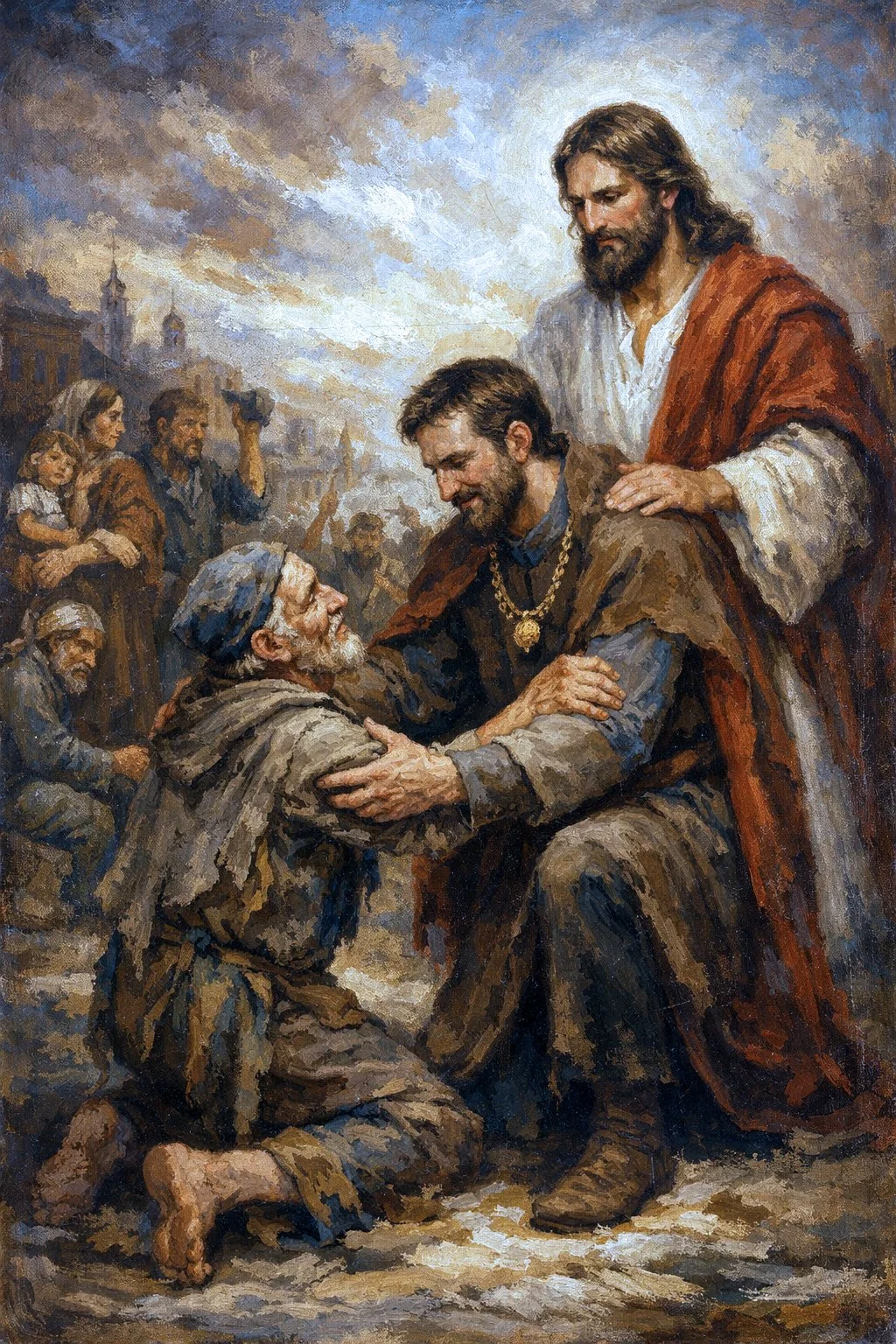
When people were in need, it was the Christians who came to their aid, not the pagans, and people were taking notice. The Christians were living respectable lives and using honest business practices, which caused them to stand out in society. The love the Christians were showing to the people around them caused people to find Christianity appealing and paganism lacking. These Christians were clearly being salt and light to the world around them.
It’s not all that different for us today. Being salt and light to our world, doesn’t have to be complicated. Look around you for opportunities to share God’s love in practical ways. Here’s a couple examples:
Pay attention to the people God has put in your life: your family, friends, co-workers, neighbors, people riding the subway with you, etc; and notice their needs and do what you can to help them.
Volunteer your time and/or donate to local Christian ministries and charities.
If you're a business owner, treat your employees like you would want to be treated: with generosity, understanding, and kindness.
If you’re an employee, work like you would want someone to work for you: to the best of your ability with honesty and integrity.
Cultivate a happy, loving, and welcoming home.
Be a living, real, tangible example of God’s love.
John 13:34-35 (NIV) says, “A new commandment I (Jesus) give you: Love one another. As I have loved you, so you also must love one another. By this everyone will know that you are My disciples, if you love one another.”
This series of blog posts titled, “Holding on to Reason”, is named after Amanda’s favorite C.S. Lewis quote: “Faith is the art of holding on to things your reason has once accepted, in spite of your changing moods.”