

I just recently learned about Naghmeh Panahi’s struggle to escape her abusive husband. (Here’s a link to an article about Naghmeh’s story.) I was terribly disappointed to find out that once she finally spoke up and began to get herself and her children away from him, other Christian men–including Franklin Graham–threw roadblock after roadblock into her path to safety. Sadly, this part of her story mirrored so many others I have seen throughout the years. Reading about her experience has kickstarted the writing down of this list of my personal thoughts and advice on these issues. (Yes, sometimes males are the ones being abused, but for the sake of clarity in writing, I am going to use an abusive male and abused female as the example).

For what it’s worth, here we go:
1. People who truly want to help need to put the work in to make sure they are actually being helpful.
Until Christian’s who haven’t experienced abuse are willing to truly put the work in to understand the deep effects of abuse and the various ways it presents itself in the abused, they should step back and let someone else handle abuse issues within the church.
Abusers are typically extremely talented manipulators; they can easily be a “perfect person” while in public but then a nightmare for their family. People who haven’t been trained to see beyond an abuser's manipulation tactics are soft targets for abusers. Sadly, confident men (even if their confidence is usually valid in other arenas) often fail to realize when they are being used by a skilled manipulator. This is why we tend to see otherwise well-meaning, non-abusive men helping abusers in ways they do not realize perpetuate the abuse and cause further harm to the abused.

In Naghmen’s case Franklin Graham was doing far more harm than help, and his actions have damaged his image in my mind. I’m not saying I would dismiss all of Franklin’s other work, because I believe with God’s help Christians can still have positive effects in the world in spite of their mistakes, but I’d be lying if I said this didn’t dampen my level of respect for him. He repeatedly tried to reunite Naghmeh with her abusive husband before she was ready and before her husband did the work necessary to become safe. He even went so far as flying her husband to where she and her children were hiding out from him, without warning her, to insist they sit down together for marriage counseling.
It should also be noted that Franklin’s own sister Anne Graham Lotz told Naghmeh that her brother “isn’t a great listener” and did not understand the situation Naghmeh was dealing with and that she should, “...nevermind him, if that’s possible.”
2. It is irresponsible and dangerous to put an abuser in the same room as the people he has abused. In most cases it is even dangerous to insist they communicate in any way because abusers have learned how to use their words like weapons against their victims.
A person who insists an abused woman should sit face to face with a man who repeatedly threatened her life and made her live in a constant state of anxiety, just because he was her husband, shows that person is, at best–willfully ignorant; at worst–abusive themselves. It’s not a matter of forgiveness and grace, it’s a matter of safety.
Would people insist she walk into a lion’s cage? No? Why not?

Because the lion would hurt and kill her.
How is it different when it is a man?
Actually, let me correct myself–it is different because that man promised to love and cherish her, to protect her, and to represent Christ in their family; instead, he acted out the darkest parts of humanity, turned her life into a nightmare, made her feel terrorized in her own home every minute of every day, caused her to second guess every small minute choice she made (because she couldn’t know what random thing would set him off), and warped her mind in ways which had her questioning even the most obvious parts of reality. The man is worse than the lion because he is capable of doing better and yet he consistently chose not to.
Step up church! Stand up people of God! Who are we? Are we abusers of women and children? Should we uplift vicious vile men who refuse to face their sin natures or allow God to heal and grow them? No! A man like that should not be trusted to be alone with women or children. And, a man like that should definitely not be in any semblance of a leadership position. A man like that should be isolated to where he cannot harm another woman or child until he does the work necessary to become someone safe enough to be around.
3. It is wrong to blame an abused person for “ruining the reputation” of their abuser.
Oftentimes advocates for abusers are more concerned with the reputation of the abuser than helping the abused. They want the actions of the abuser to be kept secret in order to prevent social fall out. In Christian circles they will claim this is to protect their ministry and to not “hurt God’s image”. Then if the abused woman makes the abuse public–which is usually necessary in order to escape the abuse–the woman gets blamed for the fallout.
Let’s picture that woman trapped in a lion’s cage again. She’s calling out for help. But, instead of helping her, people shame her for telling the truth:
The woman: ”This lion will kill me, help me get out!”
The people: “How dare you embarrass that lion; why are you trying to besmirch his reputation? Now people will view him as dangerous, how can you be so selfish?”
Is his reputation worth more than her life? No.
Is his reputation worth anything when it is actually a lie? No.
The only person who is to blame for an abuser’s reputation being ruined is the abuser himself. He made the choices to act in unacceptable ways. He has no right to expect a person he repeatedly hurt to stay silent about being hurt.

Telling people the truth: that it is dangerous to be in a cage with a lion–the lion will likely hurt and kill you–is the right thing to do. Shaming an abused woman for simply telling the truth in order to save her life and the lives of her children is despicable. Coming forward with the truth is not only the right thing to do, it is the hard thing to do. Making it harder for an abused woman to tell the truth is akin to being complicit with the abuse.
Yes, it is true, if she were to stay silent, to take each physical assault like a “champ”, to sacrifice the safety of her children to the whims of a weakwilled and selfish man, his fake, carefully constructed good reputation would have stayed intact. The community at large would be ignorant of the truth of his nature.
But should that be what we want?
Would God approve of one of his children (a Christian abuser) keeping such a terrible sin problem secret and private while they claimed to preach His love?
No, never! God wants us to grab that problem by the root and tear it out. He would never advocate for leaving His women and children to suffer under the hands of a vicious hypocritical psychotic man, and He definitely would not want His good name to be used as an excuse for their suffering.
Yes, it is true that like with Daniel in the lion’s den, God will stand with His hurting and abused women and children and comfort them through their nightmare when that is where they are at–but He does not want us to force them to stay there.
4. It is wrong to blame an abused person for “ruining their marriage”.
Likewise, saying the woman who leaves an abusive husband has ruined the marriage is false. The man who abused her ruined the marriage, she has just finally admitted the marriage is in ruins and is saving herself and her children from further fallout.

Marriage is meant to be a representation of Christ and the Church. If abuse is rampant in the marriage, then they are not correctly representing the relationship between Christ and the Church. That Biblical image has already been ruined, and it is not the victim’s fault that it has been ruined.
We must also ask ourselves: is that image meant to show people who are outside the marriage what it looks like when Christ loves the church? Or, is it meant for the people within the marriage to experience Christ’s love for the church?
Either way, an abuser ruins this image and this experience. People looking on are not seeing the true nature of Christ’s love. And, worse, the abused woman and their children are not correctly experiencing Christ’s love. Forcing them to stay and experience this false narrative–this heretical imagery–is only harmful.
5. Of course God wishes for abusers to heal and grow as well.

Yes, God can heal those men. Yes, He wants to.
God gives abusers the free will to choose to walk with Him through the hard work of healing their sinful natures.
But, if they will not choose to turn to God and do this work, we should not pretend like they have just because we want to “smooth the emotional traumatic waters”.
And if they do choose to do the hard work, the support they receive during this process should not be the responsibility of the people they abused.
Putting this burden on the shoulders of their victims has two major flaws:
It is not fair to their victims. It should never be a victim’s job to fix the person who hurt them.
The abuser has proven time and time again that they do not respect their victims or care about their opinions, this means their victims won’t be able to effectively help them.
Instead, an abusive man who wishes to break free from his abusive nature should be supported by other Christian men who have the courage, wisdom, and insight to speak the hard and honest truth to him as they help him turn from his sin and become a safe person (this is a long and hard process).
6. Do not force reconciliation between an abuser and the abused.
Here we reach another common pitfall amongst Christians. Oftentimes, hopefully well-meaning Christians try to prematurely force "reconciliation" between the abuser and the people they have abused.
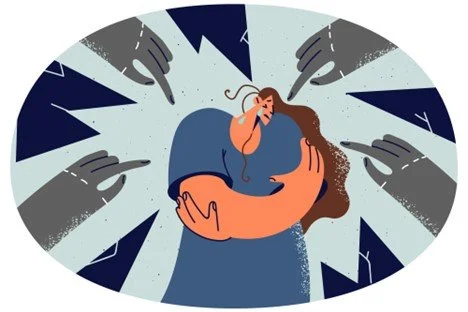
They tend to see an abuser admitting they should change as the same as actually changing, but a choice to start the healing is not the same as having successfully completed the healing.
A primary tactic of most abusers is to apologize and promise that they will change–this is one way they keep their victims around for so long. By the time a woman finally leaves her abuser, chances are they have already been apologized to countless times and each of those times the abuser was simply manipulating them in order to draw them back under their power. The abused woman has finally learned not to trust his apologies.
Sadly, outsiders who are trying to help, don’t often understand this experience–they are still willing to be deceived by the “sorry” and false promises of the abuser; and they will see the abused refusing to accept the apology as a weakness of the abused. But they are wrong, they are ill-informed on the realities of the situation and the abuser has–at this point–turned this “good samaritan” into another weapon against their victims. This is why it is vitally important to not consider words as proof of change, the abuser needs to put in visible hard work to change–they can’t be allowed to just say they will change. They need to take action towards the change.
Ironically, a man who has actually completed the healing process will realize that it is not right for him to pressure the people he has abused to forgive him. It is not anyone’s right to force reconciliation.

The abused do not owe their abusers anything–they have already given them far more than anyone should ever expect.
A truly healed abuser will realize that just because he knows he is healed, doesn’t mean the people he abused will believe it. He will know and acknowledge that he spent so many years lying and denying and twisting reality to his victims, that to them he is the boy who cried wolf. They need real solid evidence of change that they can witness from a safe distance in order to believe it to be real.
A truly healed abuser will not throw his healing in their face as if to say, “Ha, take that! I win! I did it!” A truly healed abuser will respect the boundaries of those he abused and will simply live his life better.
He will live as a man who knows no one owes him anything–especially not his victims.
He will live as a man who did the work to heal because it was the right thing to do, not because he wanted to prove anything to his accusers, his victims.
He might be able to apologize using a method that his victims find safe, but he will not insist on them forgiving him or letting him back into their lives.
7. Forgiveness is a valid goal, but it cannot be forced, and no one should try to force it.

Of course, it is true that when a hurt person forgives their abuser it helps the hurt person to heal. Being able to let go of the damage someone has done to them is like taking a weight off of their chest allowing them to breathe in fresh air. It allows them to move forward with less of a burden to bear.
When people hold a grudge and a need for revenge, then they take on the burden of justice onto their own shoulders. In a perfect world, that burden would be shouldered by the powers responsible for law and order, unfortunately we do not live in a perfect world.
Sure, some abused people might be willing and able to take on that burden for themselves and others–fighting in the political and social spheres for justice for the abused. (However, it is also possible and ideal for them to forgive their abusers while still advocating for them to face the consequences of their actions.)
For others that type of burden makes healing impossible and choosing to knuckle down in the pursuit of justice is a choice that could stymie their healing. It’s important people reflect and be honest with themselves about whether or not they can handle such a burden.
Even though forgiveness is an important step for the person who has been hurt, it is not something which the abuser can expect to be owed. At no point is it okay for an abuser or an advocate for the abuser to say, “You should forgive because it is better for you if you do and because God says that as Christians we should forgive.”
Yes, it is also true that God says Christians should forgive. But, holding that truth over a hurt person’s head is simply another form of abuse. It’s taking a whipping stick to a person who is already lying on the ground bleeding and saying, “How dare you do something so heartless as to withhold forgiveness.” It is pointless because people cannot be forced or guilted into true forgiveness. It is harmful because it is piling guilt onto an already chaotic emotional tangle. And it is just another way that the world allows an abuser to be selfish.
The victim needs time to heal. They need to be given the required space to grieve their losses, to grieve the life their abuser had promised them and had taken away, and to sort out all of the reality warping confusing lies their abuser drowned their mind in.

The victim also needs time to first forgive themselves for every choice and action they blame themselves for. They may be incorrect to blame themselves for anything, but the reality is victims usually do blame themselves. They carry a lot of guilt for various reasons, including: leaving their abusers, letting them abuse them for so long, choosing to be with that man in the first place, falling for their abuser’s lies, exposing their children to such evil, repeatedly lying to their friends and family on behalf of the abuser, for whatever weakness or offense their abuser has relentlessly accused them of, etc. That guilt needs to be dealt with in order for them to move on and heal. Is it really right to expect them to forgive the person who chose to bring pain into their lives, before they even have the strength to forgive themselves?
I say it again, forgiveness cannot and should not be forced. Forgiveness is a natural Godly outcome of the healing journey, and it needs to be allowed to show up when the time is right.
The abused person needs support as they take this healing journey, it is hard and painful, and while the journey has some similarities amongst the abused, it will also be different for each person. The hurt person should be encouraged to turn to God on this journey and to follow His leading. If they are doing so, then the Holy Spirit will help them to forgive their abuser when the time is right.
Now, whether or not they actually tell their abuser they are forgiven is another issue entirely. This depends on a host of factors, such as: is it safe to contact the abuser? And, will the abuser respect their boundaries after being told they are forgiven?
8. Forgiveness does not require allowing the abuser to re-enter their life.
If an abuser does receive forgiveness, that does not give them free reign to re-insert themselves into their victims’ lives.
Forgiveness from a victim does not get rid of the abusers' crimes nor does it undo their responsibility to face the legal and personal consequences of those crimes.
Forgiveness definitely does not work as a sort of finish line to the work the abuser needs to do in order to stop abusing people. An abuser could have done little to no work on themselves and still be told they are forgiven by their victims.

The forgiveness the abuser has been given is a mark of the healing that has come to their victims–it means their victims have done the work they needed to do to heal. It does not mean that the abuser is exonerated from the work they need to do to become a safe person for people to be around.
Being humble enough to forgive someone for their past actions, is not the same as being foolish or ignorant enough to let them back into one's life. And no one, the abuser or their advocates, should expect the forgiveness given to equal an open invitation to re-enter their lives. You can forgive a lion for biting off your arm, it doesn’t mean you should get back into the cage with them. And it definitely doesn’t mean it’s okay for someone else to suggest they do so.
9. How then should an abuser be treated within a group of Christians?
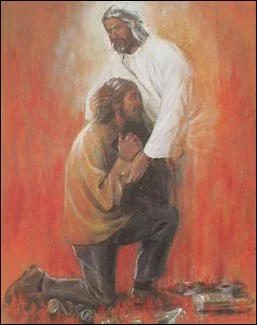
Should abusers be abandoned by the Christian world? Not necessarily. They should be handled with the church discipline instructions given to us in Matthew 18:15-20.
If it is a male abuser, other Christian males should seek him out and speak truth into his life. They should encourage him to face the realities of the harm he has caused and to start to work on uprooting that sin from his nature.
If he is receptive to church discipline then they should walk with him through this journey. If he is not receptive to church discipline, then that is a different situation altogether and they should seriously consider excommunicating him from the church until he becomes receptive.
However, even if he is receptive to church discipline, that doesn’t mean they shield him from the legal consequences of his actions. Being receptive to discipline means accepting the consequences.
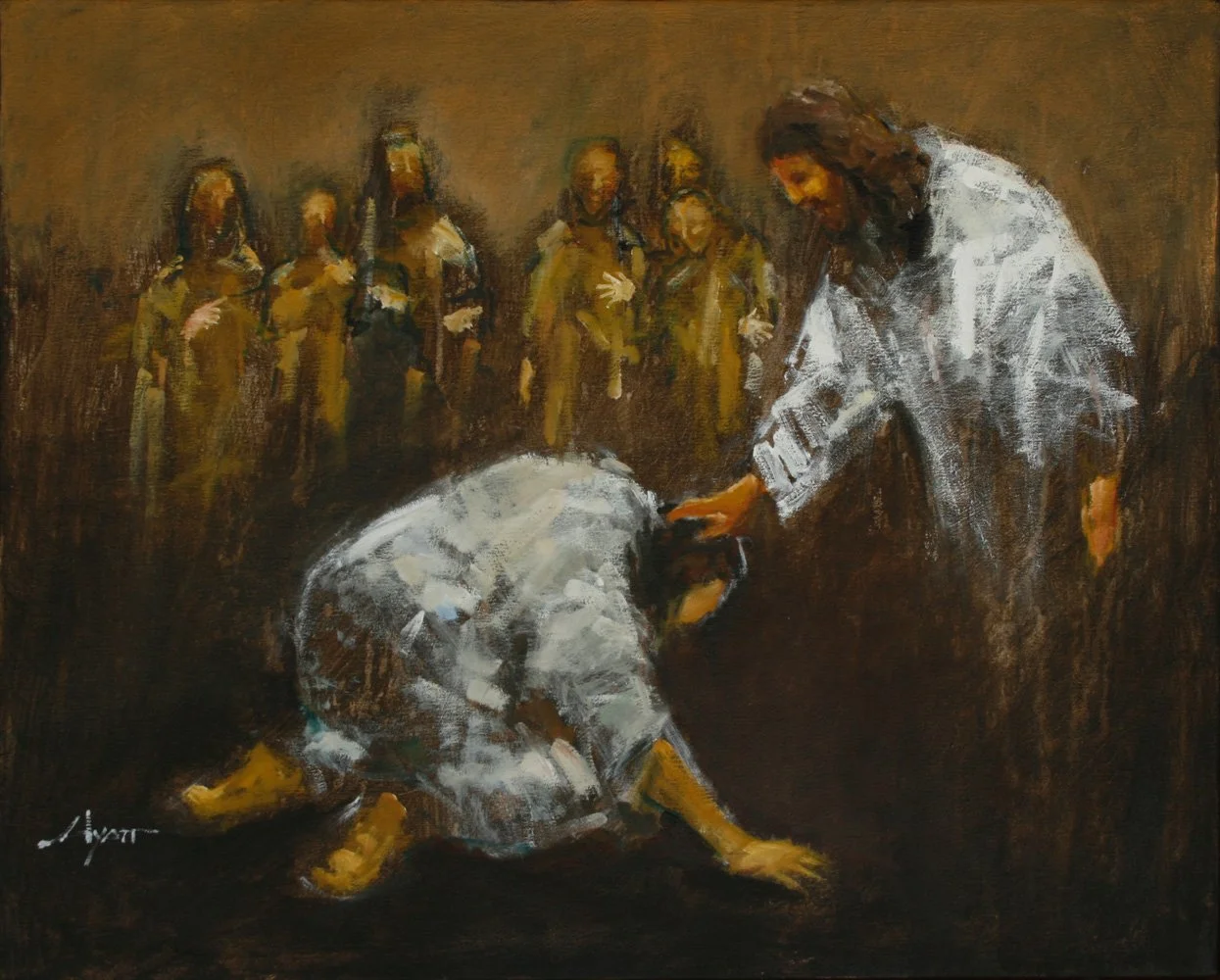
An abusive man–even one who is working to heal–also should not be allowed to stay in a position of church leadership. In fact a man who is truly receptive to wanting to face the reality and consequences of his abusive actions will realize and acknowledge the truth that he cannot be trusted to give wise guidance and should be removed from leadership.
Also, his initial receptiveness and commitment to growth does not mean he should be given access to people who are in danger of his abuse. This is both for the abused person’s sake and for the abuser’s. Because abusive behavior is like an addiction and how is one supposed to root out that addiction if they are given access to the substance they abuse?
10. How should Christian organizations act when they realize abuse has taken place under their umbrella?
I have heard way too many stories about abuse within Christian ministries being brought to light and then the organization decides to try its best to sweep it under the rug. They want to pretend it never happened because they are afraid it will make them all look bad and undo the good work the organization has been doing. They feel that, for the sake of the Gospel, every sin stain must be kept under wraps.

This method is, simply put, straight up disgusting and the opposite of productive. The truth always comes to light eventually.
What do the crowds of people looking on perceive when they hear of an organization that drowned out the voices of the victims and hid the abuser in the shadows?
They decide that the entire organization must be complicit with the abuse. At worst they assume abuse is running rampant throughout and they are all involved. At best they assume the organization simply does not care that someone was hurt under their watch and doesn't care to prevent it from happening again.
This is the type of stain that actually will take down an organization. And, worse, it gives people a terrible idea of God. They will think that since God's followers approve of or dismiss the hazards of abuse that God is not loving or just, or that He doesn’t even exist at all. Why should someone want to follow a God whose followers are so distasteful?
Instead, imagine it playing out like this:
Someone comes forward to a church or mission’s leadership and tells them about abuse which has taken place.
The leadership asks kind but pertinent questions. They make certain to get the victim (and other potential victims) to a safe location and then they investigate to verify if the claims are true. If they find out that abuse is taking place they confront the abuser with the truth, have him arrested if the law has been broken, and fire him or have him step down from his leadership position.
If the abuser is repentant and wants help to get better, then they can support him in that endeavor as fellow Christians with the church discipline process–but that does not mean he gets to keep his leadership position or job, or avoid getting arrested.
Then the world finds out about this scandal. They hear a person in this organization was an abuser. But, they also hear that as soon as the organization knew about it–they shut it down, they took the appropriate actions to snuff out the abuse and protect the victims.

This type of story makes it clear to the world that abuse is not tolerated in Christian circles: abuse is not Christ-like, and God does not approve of it. It shows them the just and loving nature of our Creator. It makes them want to join the Christian community, a community which–to the best of their abilities–strives to protect people from the evils of the world.
From my experience as a woman who divorced an abusive man, I’ve noticed two types of people (other than actual abusers) who refuse to take abuse seriously:
The first type are people who refuse to look at darkness directly. They wish to believe nothing “that bad” ever actually happens. They don’t want to see beneath the image which abusers outwardly portray, so they ignore and dismiss the pleas for help coming from victims. They wish to live as if the world is happy and sinless, ignoring the very real problems which exist. Then these real-life, dark sin issues are allowed to thrive, fester, and corrupt right under their noses. These people turn cold, unreceptive (sometimes even judgemental) shoulders to victims who are living in a nightmare, leaving them to suffer alone without any lifelines.
The second type of person is someone who has no apparent ability to sympathize with something they haven’t experienced themselves. They either have no imagination or refuse to use their imagination to put themselves into the shoes of someone else. Then, instead of understanding how horrible it would be to be imprisoned–mentally and physically–and then tortured day in and day out by someone who was meant to love and care for them, these people minimize what abuse victims experience. They sometimes even go so far as to mock victims for their wounds. They act as if victims must be weak. They assume that if the victims were smarter they would have handled their situation entirely differently; therefore, the victims must be fools and maybe even “earned” or “asked for” what happened to them.
Interacting with each of these people while escaping and after escaping abuse feels like they are pouring salt on an open wound.
Fellow Christians, let’s not be these people. As God’s image bearers, His ambassadors to our world, we need to do better.

This series of blog posts titled, “Holding on to Reason”, is named after Amanda’s favorite C.S. Lewis quote: “Faith is the art of holding on to things your reason has once accepted, in spite of your changing moods.”