

There are lots of people, particularly people of the Islamic faith, who will try to justify their belief that Jesus was simply a good man or a prophet by claiming Jesus never ‘said’ He was God.
Muslims in particular will try to insist that you show some formation of these exact words in the Bible: “Jesus said, ‘I am God worship me,’” and if you cannot find that exact wording they will act like they have proven something. But, this is a ridiculous and childish demand which fails to account for the way literature actually communicates ideas–by requiring its readers to have a clear understanding of context and audience.
As Seth Ibrahim–an apologist to Muslims–said: “Scripture does not function like a legal affidavit…it reveals truth through words, actions, titles, and authority…doctrines are not built on one isolated sentence but on the totality of revelation.”
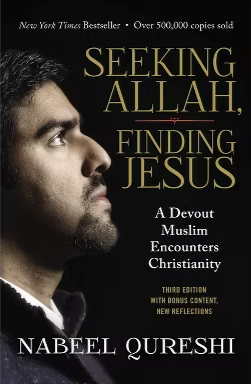
Let’s start out by hearing from Nabeel Qureshi–a man who grew up Muslim, but in his search for God’s truth ended up converting to Christianity. He explains, “When I read the New Testament the way it’s supposed to be read–from the perspective of those who understand the Old Testament–then Jesus very clearly claims to be God.”
Mark 14 contains one of Nabeel's favorite examples. He said, “In the earliest of the four Gospels–Mark’s Gospel–the whole thing points to the Deity of Jesus. That’s what the whole Gospel is about, from the beginning to the end it’s all about Jesus being God, except it’s revealed slowly. There’s only one point where there is a massive climax and that’s Mark 14:62. Finally, Jesus is being told to answer for everyone, ‘Who are you?’”
Let’s take a look at Mark 42:61b-63. In this section Jesus has been arrested, and He is standing in front of the Sanhedrin:
“Again the high priest asked him, ‘Are you the Messiah, the Son of the Blessed One?’
‘I am,’ said Jesus. ‘And you will see the Son of Man sitting at the right hand of the Mighty One and coming on the clouds of heaven.’
The high priest tore his clothes. ‘Why do we need any more witnesses?’ he asked. ‘You have heard the blasphemy. What do you think?’ They all condemned him as worthy of death.”
Nabeel said, “When I understood what Mark 14:62 was, it blew my mind. Here Jesus claims to be:
the ‘Son of Man coming on the clouds of Heaven’ from Daniel 7;
the ‘I Am’ of Exodus 3:14; and,
the ‘One sitting at the right hand of Power’ from Psalm 110:1.
Jesus very clearly claims to be God in Mark 14:62 when you understand this context.”
Jesus referring to Himself as the “I Am” of Exodus is pretty straightforward. But let’s take a deeper look at what it means for Jesus to call Himself, ‘The Son of Man sitting on the clouds of Heaven’. The Bible says repeatedly that there’s only one who comes on the clouds of Heaven and that is Yahweh–only God. And yet, Daniel 7 shows Yahweh/God the Father/the Ancient of Days sitting on a throne of fire being worshiped by angels. Then, in verse 13 a separate being enters: “...one like the Son of Man was coming on the clouds of Heaven and approached the Ancient of Days.”
Nabeel says, “In verse 14, to this Son of Man was ‘given authority, glory and sovereign power; all nations and peoples of every language worshiped him’. This is the word ‘latreuo’ which is the Greek equivalent in the Septuagint (the word ‘pelah’ in Aramaic). This word is used 130 times throughout the Old Testament and New, and every single time it is used as a service due to God alone–except in this passage when it is used for ‘someone’ who looks like the Son of Man who is riding on the clouds of Heaven who is going to have people of every nation and language serve Him. This Son of Man receives that service (latreuo) due only to God. When Jesus says, ‘And you will see the Son of Man…coming on the clouds of Heaven,’ He is saying, ‘Remember that guy from Daniel 7? That’s me.’”
Now let’s look closer at what Jesus is saying when He claims that He will be “sitting at the right hand of Power”. That’s a reference to Psalm 110:1 which says. “The Lord says to my lord: ‘Sit at my right hand until I make your enemies a footstool for your feet.’”
In the second temple period of Jewish history no one was ever depicted as sitting next to God. According to Semitic tradition, sitting at God’s right hand would represent being co-ruler of the universe.
When the context of the Old Testament and Jewish history and tradition is understood, it’s easy to see that in Mark 14 when Jesus claimed these three titles/descriptions for Himself, He was claiming to be God.
It was also clear to the Sanhedrin that Jesus was claiming to be God and this claim is why they condemned Him to death.
Let’s take a look at a few of the other times Jesus clearly demonstrated that He is God through words and actions:
Jesus said He and the Father are one.
We see this in John 10:25-33:
“Jesus answered, ‘I did tell you, but you do not believe. The works I do in my Father’s name testify about me, but you do not believe because you are not my sheep. My sheep listen to my voice; I know them, and they follow me. I give them eternal life, and they shall never perish; no one will snatch them out of my hand. My Father, who has given them to me, is greater than all; no one can snatch them out of my Father’s hand. I and the Father are one.’
Again his Jewish opponents picked up stones to stone him, but Jesus said to them, ‘I have shown you many good works from the Father. For which of these do you stone me?’
‘We are not stoning you for any good work,” they replied, “but for blasphemy, because you, a mere man, claim to be God.’”
Jesus forgave sins, even though only God can forgive sins.

Mark 2:6-7 says:
“When Jesus saw their faith, he said to the paralyzed man, ‘Son, your sins are forgiven.’
Now some teachers of the law were sitting there, thinking to themselves, ‘Why does this fellow talk like that? He’s blaspheming! Who can forgive sins but God alone?’’”
Now some teachers of the law were sitting there, thinking to themselves, ‘Why does this fellow talk like that? He’s blaspheming! Who can forgive sins but God alone?’’”
And when Jesus was dying on the cross, he forgave the sins of one of the criminals hanging next to him. We see this in Luke 23:39-43:
“One of the criminals who hung there hurled insults at him: ‘Aren’t you the Messiah? Save yourself and us!’
But the other criminal rebuked him. ‘Don’t you fear God,’ he said, ‘since you are under the same sentence? We are punished justly, for we are getting what our deeds deserve. But this man has done nothing wrong.’
Then he said, ‘Jesus, remember me when you come into your kingdom.’
Jesus answered him, ‘Truly I tell you, today you will be with me in paradise.’”
Jesus allowed people to worship Him.
He never chastised or stopped people when they worshiped Him. In contrast, whenever people tried to worship angels or prophets, the angels and prophets always stopped them.
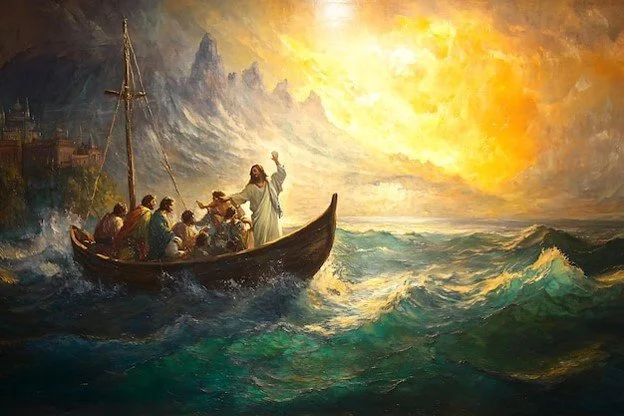
For example, after Jesus has Peter walk on water and then He calms the storm, in Matthew 14:33 it says:
“Then those who were in the boat worshiped him, saying, “Truly you are the Son of God.”
Also, in John 9, a man had just been kicked out of the synagogue for telling them that Jesus had restored his eyesight, and Jesus has the following conversation with him in verses 35-38:
“Jesus heard that they had thrown him out, and when he found him, he said, ‘Do you believe in the Son of Man?’
‘Who is he, sir?’ the man asked. ‘Tell me so that I may believe in him.’
Jesus said, ‘You have now seen him; in fact, he is the one speaking with you.’
Then the man said, ‘Lord, I believe,’ and he worshiped him.”
Jesus again called Himself “I Am”.
“I Am” is the name God gave Moses from the burning bush (Exodus 3:14), and Jesus claimed He existed before Abraham.
John 8:58-59 says:
“Very truly I tell you,” Jesus answered, “before Abraham was born, I am!” At this, they picked up stones to stone him, but Jesus hid himself, slipping away from the temple grounds.
Once again the people who heard Jesus say these things knew He was claiming to be God and that’s why they tried to kill Him.
These are just a few examples. The reality is, Jesus’ entire life and ministry is one big revelation as to who He is–God.
Furthermore, we know that the earliest Christians worshiped Jesus.
Paul wrote the book of Philippians while he was on house arrest in Rome around 62 AD.
In Philippians 2:5-11 Paul says the following:
“In your relationships with one another, have the same mindset as Christ Jesus:
Who, being in very nature God, did not consider equality with God something to be used to his own advantage; rather, he made himself nothing by taking the very nature of a servant, being made in human likeness. And being found in appearance as a man, he humbled himself by becoming obedient to death—even death on a cross!
Therefore, God exalted him to the highest place and gave him the name that is above every name, that at the name of Jesus every knee should bow, in heaven and on earth and under the earth, and every tongue acknowledge that Jesus Christ is Lord, to the glory of God the Father.”
When Paul says, “...that at the name of Jesus every knee should bow…” he is referencing Isaiah 45. But, where Isaiah 45 uses the name ‘Yahweh’, Paul replaces it with ‘Jesus’.
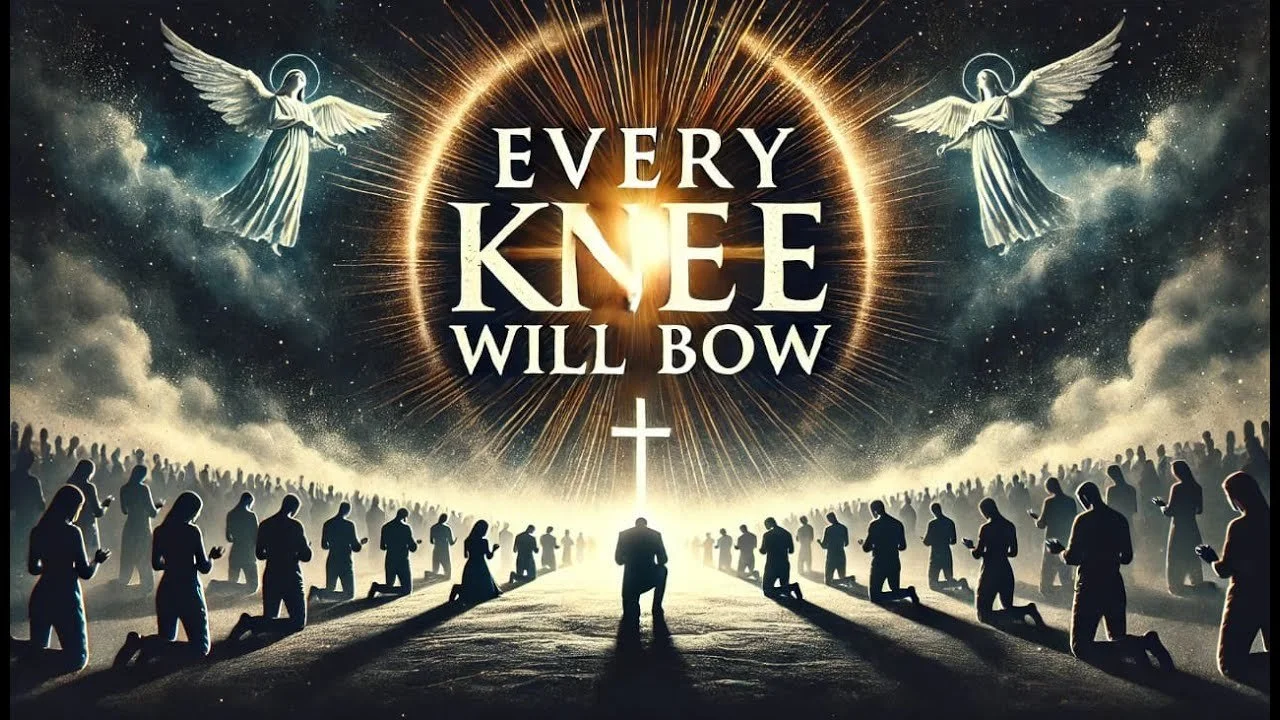
Nabeel Qureshi said, “The earliest layer of Christian history that we have access to shows Jesus being worshiped as Yahweh Himself, and I have to ask–in a Jewish context where people are very very careful not to worship anyone but God, how in the world did they start worshipping Jesus so fast? And the best answer I can give is that Jesus Himself said He was God.”
To finish things off, I’d like us all to read through John 1:1-18.
Even though this isn’t Jesus in His human body speaking, it is clearly speaking about Jesus and is still part of the Bible—which is the Word of God.
“In the beginning was the Word, and the Word was with God, and the Word was God. He was with God in the beginning. Through him all things were made; without him nothing was made that has been made. In him was life, and that life was the light of all mankind. The light shines in the darkness, and the darkness has not overcome it.
There was a man sent from God whose name was John. He came as a witness to testify concerning that light, so that through him all might believe. He himself was not the light; he came only as a witness to the light.
The true light that gives light to everyone was coming into the world. He was in the world, and though the world was made through him, the world did not recognize him. He came to that which was his own, but his own did not receive him. Yet to all who did receive him, to those who believed in his name, he gave the right to become children of God—children born not of natural descent, nor of human decision or a husband’s will, but born of God.
The Word became flesh and made his dwelling among us. We have seen his glory, the glory of the one and only Son, who came from the Father, full of grace and truth.
(John testified concerning him. He cried out, saying, ‘This is the one I spoke about when I said, ‘He who comes after me has surpassed me because he was before me.’) Out of his fullness we have all received grace in place of grace already given. For the law was given through Moses; grace and truth came through Jesus Christ. No one has ever seen God, but the one and only Son, who is himself God and is in closest relationship with the Father, has made him known.”
In conclusion, I’d like to reiterate the fact that there isn’t one specific forced sentence which causes Christians to worship Jesus as God. We worship Jesus because of the witness of Scripture as a whole.
This series of blog posts titled, “Holding on to Reason”, is named after Amanda’s favorite C.S. Lewis quote: “Faith is the art of holding on to things your reason has once accepted, in spite of your changing moods.”