

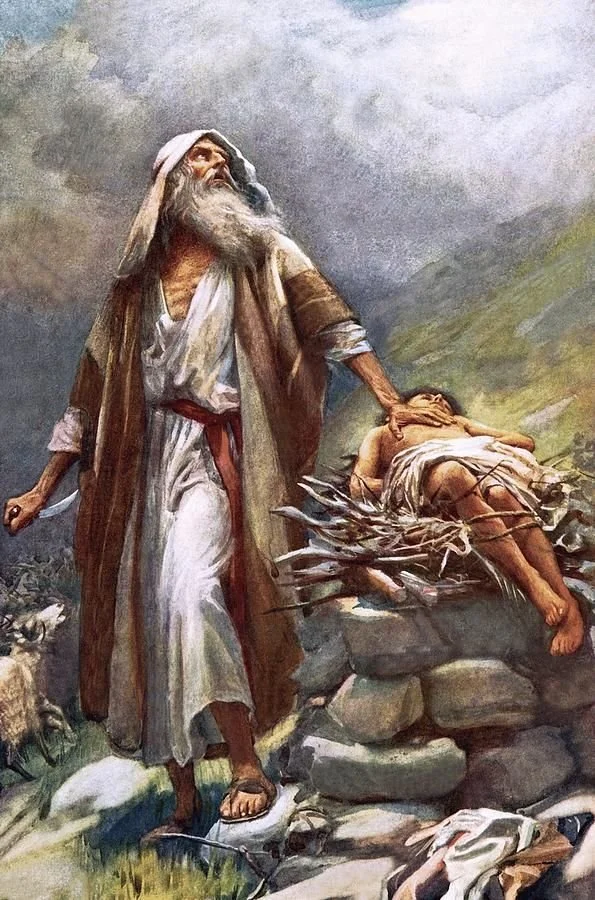
Abraham is known as the “Father of Faith”, but some people like to use his pivotal faith story as proof that the Bible describes God as cruel and that He may ask us to sacrifice our children on altars for Him. Spoiler alert: those people are wrong.
Did God ask Abraham to sacrifice his son, Isaac, on an altar? Yes.
Did God actually plan on having Abraham sacrifice his son on an altar? No.
So why would God ask that?
This is where reading comprehension skills come in. If someone just pulls out the verse where God tells Abraham to sacrifice his son and then claims it’s proof that God demands human sacrifices, they are committing a terrible crime against the art of storytelling. When Abraham’s life story as a whole is considered, it is clear that God was never planning on actually having Isaac killed. God was simply testing Abraham’s faith–whether or not he believed that God would keep the promises He had made.
Genesis 22:1-2 (NLT) says, ”Some time later, God tested Abraham’s faith. ‘Abraham!’ God called. ‘Yes,’ he replied. ‘Here I am.’ ‘Take your son, your only son—yes, Isaac, whom you love so much—and go to the land of Moriah. Go and sacrifice him as a burnt offering on one of the mountains, which I will show you.’”
The most obvious question after reading this passage is, “Why is it considered a test of faith for God to tell Abraham to sacrifice his son, and not a test of his blind obedience?”
To understand that, we need to understand the context.
First off, God had made Abraham promises which relied on Isaac being alive:
Genesis 15:4-5 (NLT) says, “Then the LORD said to him, ‘No, your servant will not be your heir, for you will have a son of your own who will be your heir.’ Then the LORD took Abram outside and said to him, ‘Look up into the sky and count the stars if you can. That’s how many descendants you will have!’ And Abram believed the LORD, and the LORD counted him as righteous because of his faith.”

Genesis 21:1-3 (NLT) says, “The LORD kept his word and did for Sarah exactly what he had promised. She became pregnant, and she gave birth to a son for Abraham in his old age. This happened at just the time God had said it would. And Abraham named their son Isaac.”
Genesis 21:12b (NIV) says, “ …it is through Isaac that your offspring will be reckoned.”
God promised Abraham he would have a multitude of descendants specifically through Isaac. Abraham knew God always keeps His promises, so, Abraham reasoned that God needed Isaac alive and he had faith that if he did whatever God asked of him, God would still work things out to where His promises were kept.
Here is some insight into Abraham’s mindset on the issue:
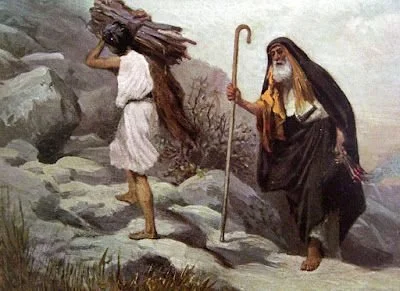
Genesis 22:5-8 (NLT) says, “On the third day of their journey, Abraham looked up and saw the place in the distance. ‘Stay here with the donkey,’ Abraham told the servants. ‘The boy and I will travel a little farther. We will worship there, and then we will come right back.’ So Abraham placed the wood for the burnt offering on Isaac’s shoulders, while he himself carried the fire and the knife. As the two of them walked on together, Isaac turned to Abraham and said, ‘Father?’ ‘Yes, my son?’ Abraham replied.‘We have the fire and the wood,’ the boy said, ‘but where is the sheep for the burnt offering?’ ‘God will provide a sheep for the burnt offering, my son,‘ Abraham answered. And they both walked on together.”
As a child, I used to think maybe these statements Abraham made were lies in order to trick Isaac into being the sacrifice. But, after further studies, it has become obvious that Abraham is not lying, he actually believes what he is saying. His faith is so strong he knows both he and Isaac will be returning to the servants and that God will provide the offering. (Note: this story God set up is specifically meant to be a foreshadowing of how God provides the sacrifice for the sins of the entire world through Jesus.)
And how did this story end?
Genesis 22:9-14 (NLT) says:
“When they arrived at the place where God had told him to go, Abraham built an altar and arranged the wood on it. Then he tied his son, Isaac, and laid him on the altar on top of the wood. And Abraham picked up the knife to kill his son as a sacrifice. At that moment the angel of the Lord called to him from heaven, ‘Abraham! Abraham!’
‘Yes,’ Abraham replied. ‘Here I am!’
‘Don’t lay a hand on the boy!’ the angel said. ‘Do not hurt him in any way, for now I know that you truly fear God. You have not withheld from me even your son, your only son.’
Then Abraham looked up and saw a ram caught by its horns in a thicket. So he took the ram and sacrificed it as a burnt offering in place of his son. Abraham named the place Yahweh-Yireh (which means ‘the Lord will provide’). To this day, people still use that name as a proverb: ‘On the mountain of the Lord it will be provided.’”
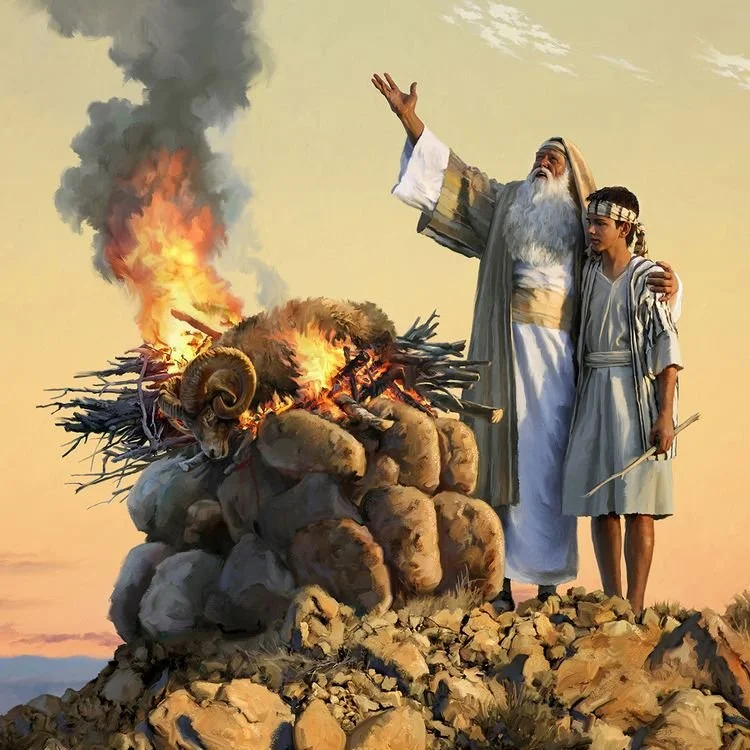
This idea that Abraham was walking in faith is also confirmed in what is known as the “Chapter of Faith” in Hebrews when this story is referenced.
Hebrews 11: 17-19 (NLT) says, “It was by faith that Abraham offered Isaac as a sacrifice when God was testing him. Abraham, who had received God’s promises, was ready to sacrifice his only son, Isaac, even though God had told him, ‘Isaac is the son through whom your descendants will be counted.’ Abraham reasoned that if Isaac died, God was able to bring him back to life again. And in a sense, Abraham did receive his son back from the dead.”
Abraham didn’t know exactly what would happen when he put Isaac on the altar (he couldn’t yet physically see the outcome), but he knew that even if Isaac did die, God would bring him back to life. Abraham’s faith was strong, because he was firmly rooted in the knowledge that God always keeps His promises. Every single person who interacts properly with God in the Bible is doing so through faith. If we want to also live by faith, we should follow their examples.
But, back to the matter at hand: God makes His opinion on child sacrifice very clear throughout the rest of the Bible as well. Here are a few examples:
Deuteronomy 18:10 (ESV) says, “There shall not be found among you anyone who burns his son or his daughter as an offering, anyone who practices divination or tells fortunes or interprets omens, or a sorcerer.”
Deuteronomy 12:31 (ESV) says, “You shall not worship the Lord your God in that way, for every abominable thing that the Lord hates they have done for their gods, for they even burn their sons and their daughters in the fire to their gods.”
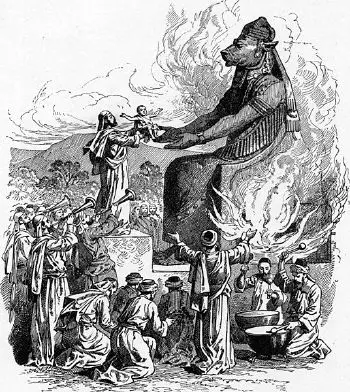
2 Kings 21:6 (ESV) says, “And he burned his son as an offering and used fortune-telling and omens and dealt with mediums and with necromancers. He did much evil in the sight of the Lord, provoking him to anger.”
Jeremiah 32:35 (ESV) says, “They built the high places of Baal in the Valley of the Son of Hinnom, to offer up their sons and daughters to Molech, though I did not command them, nor did it enter into my mind, that they should do this abomination, to cause Judah to sin.”
Psalm 106:37-41 (ESV) says, “They sacrificed their sons and their daughters to the demons; they poured out innocent blood, the blood of their sons and daughters, whom they sacrificed to the idols of Canaan, and the land was polluted with blood. Thus they became unclean by their acts, and played the whore in their deeds. Then the anger of the Lord was kindled against his people, and he abhorred his heritage; he gave them into the hand of the nations, so that those who hated them ruled over them.”
One last important point: In contrast to the false gods and idols who demanded child sacrifice, God not only demands we don’t sacrifice our children on altars to Him; He also took it a huge step further by sacrificing His Son for us.
John 3:16-18 (NIV) says, “For God so loved the world that he gave his one and only Son, that whoever believes in him shall not perish but have eternal life. For God did not send his Son into the world to condemn the world, but to save the world through him. Whoever believes in him is not condemned, but whoever does not believe stands condemned already because they have not believed in the name of God’s one and only Son.”
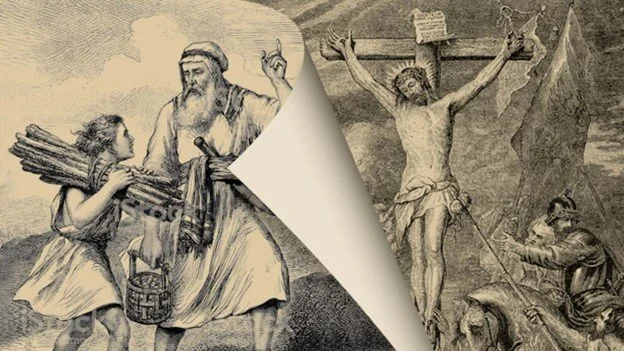
Of course, even this is different from the child sacrifice of the false gods and idols: the father-son relationship between God the Father and God the Son is imagery to help us humans understand the nature of the Trinity. God the Father did not birth or bring into existence God the Son in any way–they have both existed together with the Holy Spirit for all eternity. While the entire truth of the Trinity is hard for us humans to wrap our minds around, there are a few things we can know for sure about it and one of those truths is the fact that Jesus isn’t a helpless child who was murdered by His parent. Jesus is God incarnate, and He made the choice Himself to be the sacrifice for our sins because He loves us.
Hebrews 7:27 (ESV) says, “He has no need, like those high priests, to offer sacrifices daily, first for his own sins and then for those of the people, since he did this once for all when he offered up himself.”
Titus 2:14 (ESV) says, “Who gave himself for us to redeem us from all lawlessness and to purify for himself a people for his own possession who are zealous for good works.”
Ephesians 5:1-2 (ESV) says, “Therefore be imitators of God, as beloved children. And walk in love, as Christ loved us and gave himself up for us, a fragrant offering and sacrifice to God.”
This series of blog posts titled, “Holding on to Reason”, is named after Amanda’s favorite C.S. Lewis quote: “Faith is the art of holding on to things your reason has once accepted, in spite of your changing moods.”