

“God created mankind in his own image, in the image of God he created them; male and female he created them.” -Genesis 1:27 (NIV)
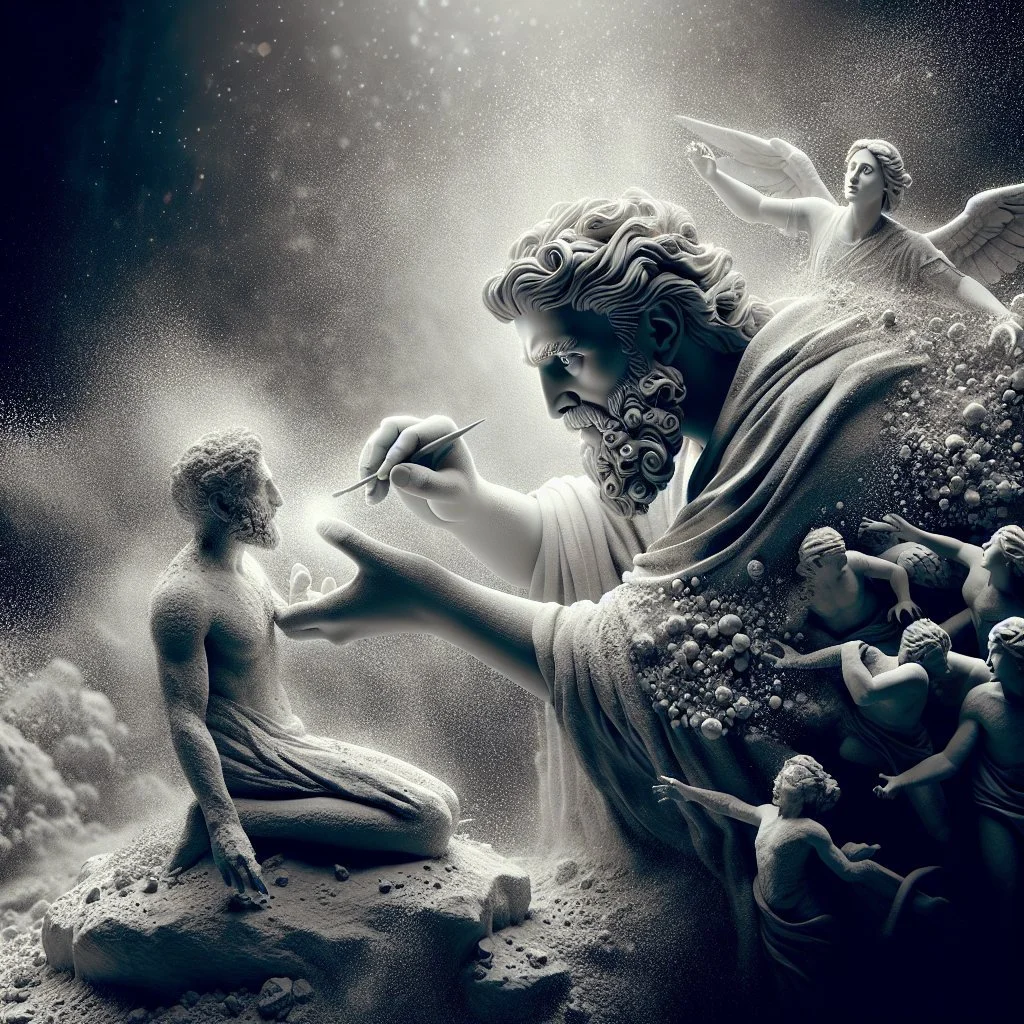
We have been made in the image of God and one of the first things the Bible describes God as doing is creating. Every human being is unique, and I believe that for some of us, part of being made in God’s image includes being gifted the imagination, the ability, and the desire to also create. The arts are one of the ways humans use their creativity.
Francis Schaeffer– theologian, philosopher, and apologist–said, “Art is a reflection of God’s creativity, an evidence that we are made in the image of God.”
Our American culture tends to not take the pursuit of the arts seriously. I grew up feeling as if our community believed the arts were unnecessary–an excess–allowed if all the more important things had been completed. However, Scripture treats the arts as a Divine calling. We can see this through what we read of Bezalel and Oholiab in Exodus:
“Then the Lord said to Moses, ‘See, I have chosen Bezalel son of Uri, the son of Hur, of the tribe of Judah, and I have filled him with the Spirit of God, with wisdom, with understanding, with knowledge and with all kinds of skills— to make artistic designs for work in gold, silver and bronze, to cut and set stones, to work in wood, and to engage in all kinds of crafts. Moreover, I have appointed Oholiab son of Ahisamak, of the tribe of Dan, to help him. Also I have given ability to all the skilled workers to make everything I have commanded you…’” -Exodus 31:1-6 (NIV)
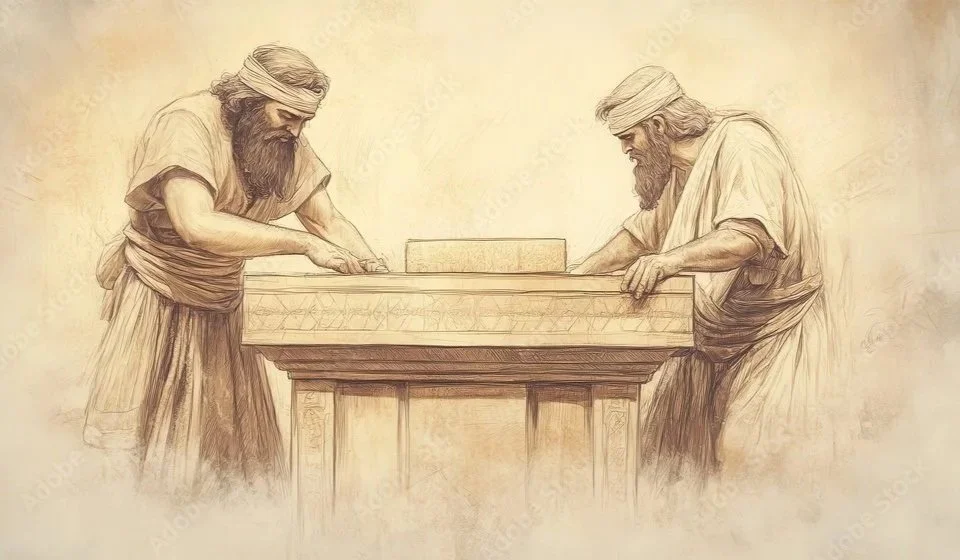
Typically when we think of people being chosen by God and filled with the Spirit, we think of people sent into the ministry or to the mission field. But Bezalel was called to work as an artist, ‘filled with the Spirit...to engage in all kinds of crafts’. When God set out His design for the tabernacle, He didn’t view the beautification of it to be unnecessary–He viewed it as important enough to engage the Holy Spirit in the process. And Bezalel was not alone. Repeatedly in Exodus we find references to people to whom 'the Lord had given skill' as craftspeople.
Pablo Picasso said, "God is really another artist. He invented the giraffe, the elephant, and the cat. He has no real style; He just goes on trying other things."
When God created the world He cared enough to make it beautiful. Therefore, it seems fair to conclude that God takes joy in beauty.
Psalm 19:1 (NIV) says, “The heavens declare the glory of God; the skies proclaim the work of his hands.”
The arts can be used to highlight the beauty of our world and to worship God by celebrating His creation.
“This ought to be the slogan of every Christian artist, musician, or writer: to work for the glory of God and the creation of beauty.”
Theologian John Piper said, "Imagination is the faculty of the mind that God has given us to make the communication of his beauty beautiful."
In Exodus 28:2 & 40, the Lord tells Moses to make garments for the priests 'for glory and for beauty'. As Matt Heard, author of “Life With a Capital L”, said, “This ought to be the slogan of every Christian artist, musician, or writer: to work for the glory of God and the creation of beauty.”
It is clear that some people have been gifted in artistic fields. God is honored when we use our best artistic skills in the worship of Him, as is true with all of the gifts and skills granted by Him.
1 Peter 4:10 (NIV) says, “Each of you should use whatever gift you have received to serve others, as faithful stewards of God’s grace in its various forms.”
John Leax–a poet, essayist, and fiction writer–said, "Since Christians–artists as well as evangelists–have within them the power of the Holy Spirit, it is only logical to conclude that artists–who bring everything into captivity for Christ–write, just as they live, under the direction of the Holy Spirit."
Of course, it is possible for humans to use their free will to wield the gift of creativity for evil purposes–polluting our culture and worldviews–and we see this being done all over the world. But the best response to art which has been used to bring about evil purposes, is for God’s followers to also create art–art which reflects God’s glory and truth—shining a light into a darkened world.
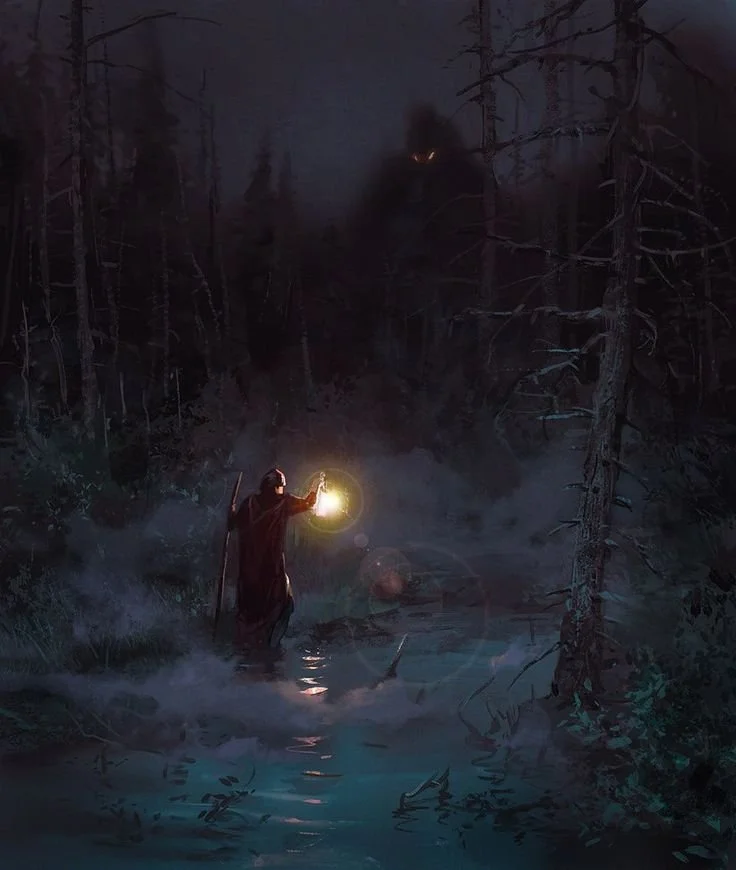
Matt Heard said, "But God does not call His people simply to run around putting out fires after the secular world has lighted them. He calls us to light our own fires, to renew culture. And the best way to drive out bad art is to encourage good art. C.S. Lewis said, 'If you do not read good books, you will read bad ones. If you reject aesthetic satisfactions, you will fall into sensual satisfactions.' Since human beings are created in the image of God, they will create culture of one kind or another. The only question is whether it will be a decadent culture or a Godly one."
Human beings hunger and thirst for art and entertainment, not unlike how we hunger and thirst for food and water. If Christians are not providing healthy art for consumption, people will consume whatever it is they find, and our adversaries in the spiritual battle have no qualms about making “poisonous” art.
Madeleine L'Engle–author of “A Wrinkle in Time”--said, "If art is good art, if it is true art, if it is beautiful art, then it is bearing witness to the Author of the good, the true, and the beautiful."
Jesus, Himself, illustrated for us the value of the art of storytelling through His use of parables.
Matt Heard said, "Just think of the effective way Jesus used images and stories. He could have just said, 'Take care of people who are hurt and victimized.' Instead, he spun the story of the Good Samaritan. He could have just said, 'God forgives your sins.' Instead, he told the parable of the Prodigal Son. Why? Because a story gets at aspects of the truth that are beyond the power of didactic teaching. Symbols, metaphors, allegories, and images move the whole person--the emotions and senses–as well as the intellect. The rich, evocative words of literature are far more powerful than factual description."
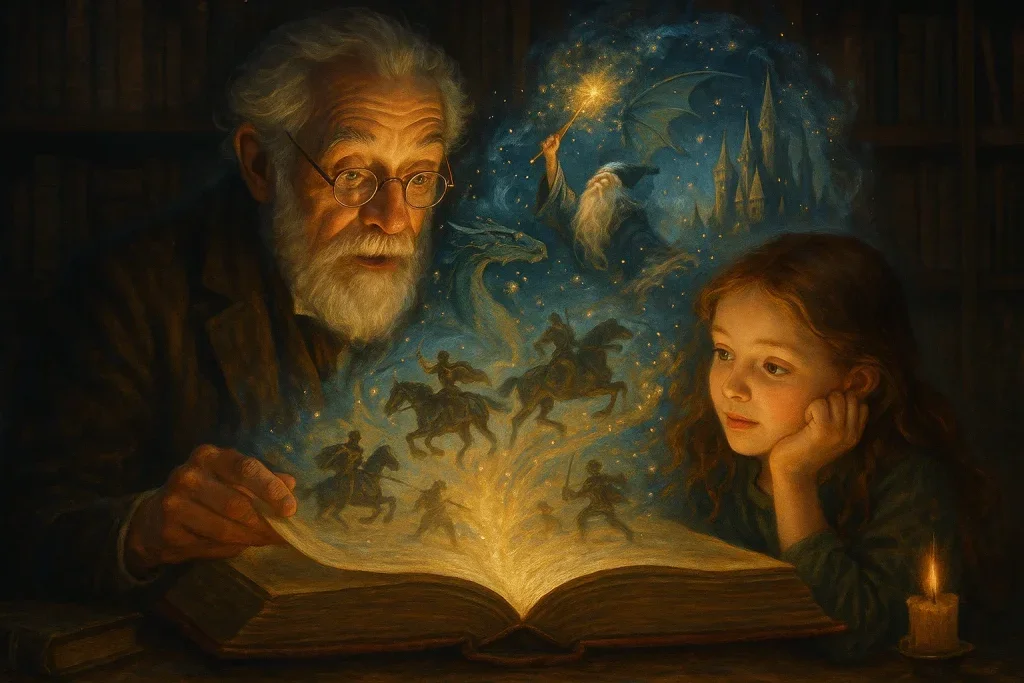
Child psychologist Bruno Bettelheim noted, "Good stories do what scolding or lecturing can never do: they make us want to be good. Children's moral choices are based not on abstract standards of right and wrong but on the people they admire and want to emulate. The question for the child is not, 'Do I want to be good?' But, ‘Who do I want to be like?' As children read, they encounter characters they can admire and identify with, and as children vicariously make choices along with the characters, their own character is shaped."
We’ve all felt it before, that moment when a painting, a symphony, a novel, or even elaborate architecture taps into something inside of us which is crying out for connection to the Divine–a part of our souls which is stretching towards the Heavens, yearning for eternity, for God’s loving embrace, for unity with truth.
Ecclesiastes 3:11 (NIV) says, “He (God) has made everything beautiful in its time. He has also set eternity in the human heart…”
Perfection is not something humanity can attain on our own. We will never be able to fully depict God’s glory or entirely match the beauty of nature. But, through the act of creating–with the strokes of paintbrushes, the clicks of keyboards, the hum of violin strings–we can be a dim reflection of the Imagio Deo and, in a world which is drowning in darkness, every flicker of light is an invaluable lifeline. Every time we answer the Holy Spirit’s call to create, we are following in the footsteps of our Heavenly Father–just as He designed us to do.
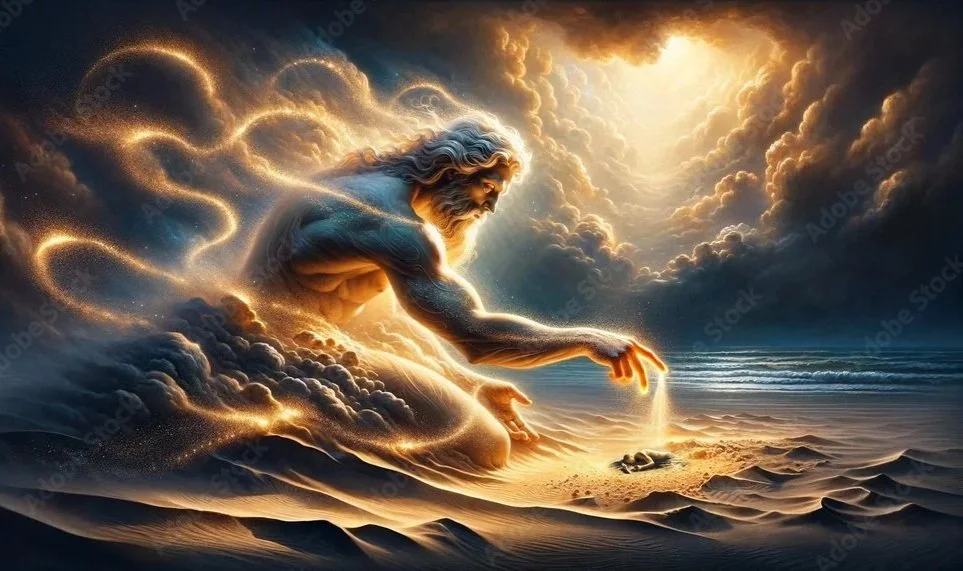
Isaiah 64:8 (NIV) says, “Yet you, Lord, are our Father. We are the clay, you are the potter; we are all the work of your hand.”
This series of blog posts titled, “Holding on to Reason”, is named after Amanda’s favorite C.S. Lewis quote: “Faith is the art of holding on to things your reason has once accepted, in spite of your changing moods.”